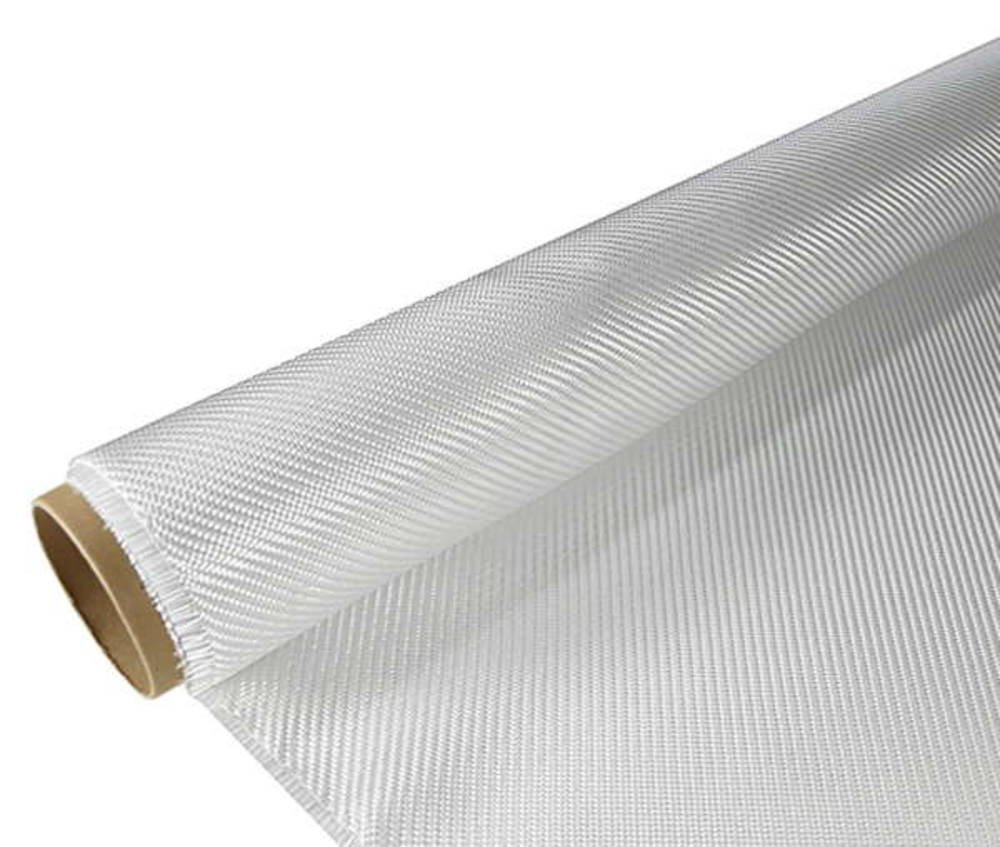
Heavy glass filament fabric in twill weave for load-bearing and highly loaded GFRP laminates.
Interglas 92140 with an areal weight of 390 g/m² and FK 144 finish combines a high fibre content per ply with good drapability. The 125 cm wide version is particularly suitable for larger fuselage shells, fairings, marine components, automotive parts and moulds.
MATERIAL ACCORDING TO AVIATION STANDARD
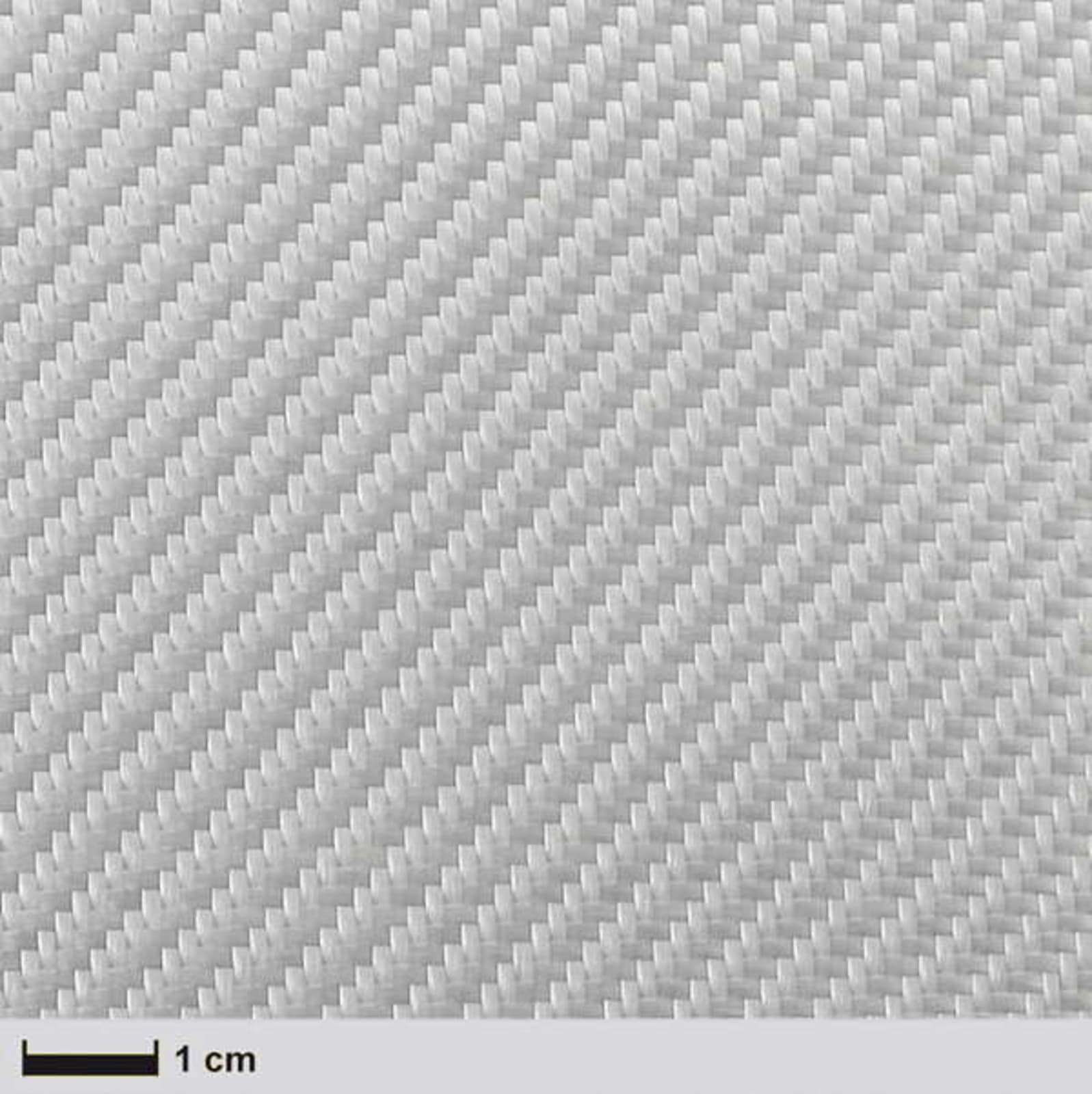
Interglas 92140 is a heavy E-glass filament fabric with an areal weight of 390 g/m². Despite its high areal weight, the twill weave provides good drapability over curved surfaces, radii and three-dimensional component geometries. The high reinforcement areal weight per ply allows structural laminate lay-ups to be produced with a limited number of fabric plies.
The yarn construction differs in the warp and weft directions. The warp consists of EC 9-68 × 5 t0 at 6.0 ends/cm, while the weft consists of EC 9-272 at 6.7 picks/cm. For structurally loaded components, this directional fibre distribution should be taken into account when defining the fabric orientation.
| Interglas / Style | 92140 |
| WLB No. | 8.4554.60 |
| Fibre type | E-glass |
| Areal weight | 390 g/m² |
| Finish | FK 144 |
| Weave | Twill |
| Warp yarn | EC 9-68 × 5 t0 |
| Weft yarn | EC 9-272 |
| Warp thread count | 6.0 ends/cm |
| Weft thread count | 6.7 picks/cm |
| Width | 125 cm |
Benefits of the Fabric
High reinforcement content per ply
With an areal weight of 390 g/m², a relatively high amount of reinforcing fibre is incorporated into the laminate with each fabric ply. This allows load-bearing laminate sections to be built with fewer individual plies than would be required with lighter glass fabrics.
Good drapability
The twill weave has fewer yarn interlacings and longer floats than a comparable plain weave. This allows the fabric to conform more readily to curved surfaces and three-dimensional contours. Due to the lower resistance to yarn displacement compared with a similar plain-weave fabric, careful handling is recommended during cutting and positioning.
Good wet-out
The fabric can be readily wetted out with suitable laminating resin systems. When fully impregnated, the glass becomes significantly more transparent, making dry or insufficiently wetted areas easier to identify during processing.
Applications
Interglas 92140 is suitable for load-bearing and highly loaded composite components where a high reinforcement content per ply is required in combination with good conformability to the component geometry. For aircraft and ultralight aircraft applications, the specified laminate lay-up, resin system and manufacturing process must be observed.
Typical applications:
- Aircraft and ultralight aircraft construction
- Fuselage shells and load-bearing structural components
- Automotive components and fairings
- Boat and yacht building
- Model construction
- Mould and tool making
- Repairs and local structural reinforcement
Suitable Resin Systems
The fabric can be processed with suitable epoxy, polyester and vinyl ester resin systems. For highly loaded structural components and aircraft applications, the specified or approved resin system must be used.
The FK 144 finish is designed for use with suitable thermosetting resin systems. For hand lay-up, complete wet-out of the yarn bundles must be ensured; low-viscosity laminating resins can facilitate impregnation of the heavy fabric.
Calculated Data for Hand Lay-Up Laminates with 35 Vol.-% Fibre Content
| Resin consumption | 320 g/m² |
| Laminate thickness | 0.43 mm |
| Laminate weight | 710 g/m² |
Benefits of the 125 cm Width
The 125 cm wide version allows larger continuous fabric cuts and is particularly suitable for fuselage shells, marine components, automotive fairings, panels and larger moulds. Depending on the component geometry, the wider fabric can reduce the number of fabric joints and overlap areas required. Wide cut pieces should be adequately supported during handling and placement to minimise unintended yarn displacement.
Technical Notes
Fabric orientation
Due to the different yarn construction and thread count in the warp and weft directions, the fabric should not be regarded as fully symmetrical. For structurally loaded components, the fabric orientation should be selected according to the principal load directions and the specified laminate lay-up.
Aircraft applications
The designation “material according to aviation standard” applies to the glass fabric itself. It does not automatically constitute approval of the laminate or finished component manufactured from it. The specified laminate lay-up, approved resin system, manufacturing process and applicable qualification and process requirements remain decisive.












 MSDS Interglas Glass fabric (PDF)