Extremely lightweight carbon/aramid hybrid fabric for thin, stiff and impact-resistant laminates
At only 68 g/m², this fine hybrid fabric combines the high stiffness of carbon fibre with the characteristic benefits of aramid under impact, shock and abrasion loading. It is particularly suitable for very lightweight, thin-walled components where a pure carbon fabric provides the required stiffness but additional resistance to mechanical damage is desirable.
At a calculated fibre volume fraction of 35%, the laminate thickness is only approx. 0.118 mm per ply.
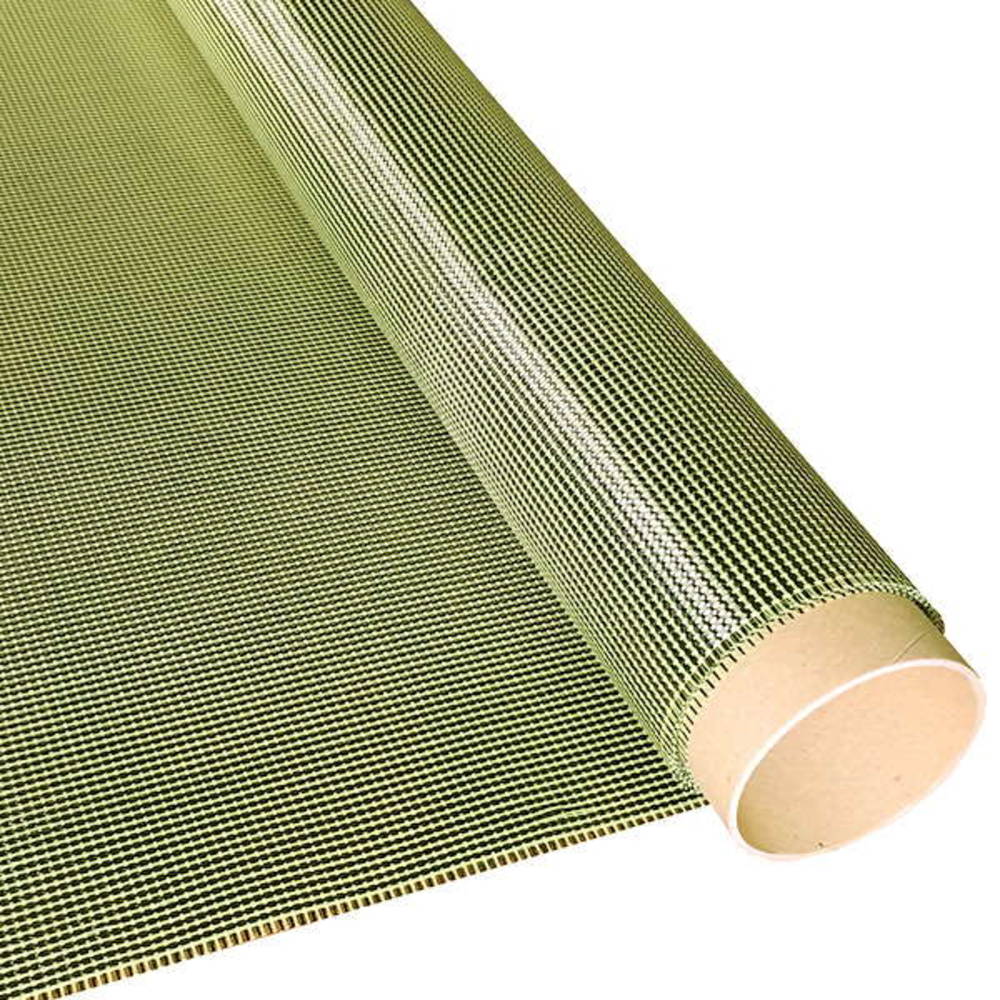
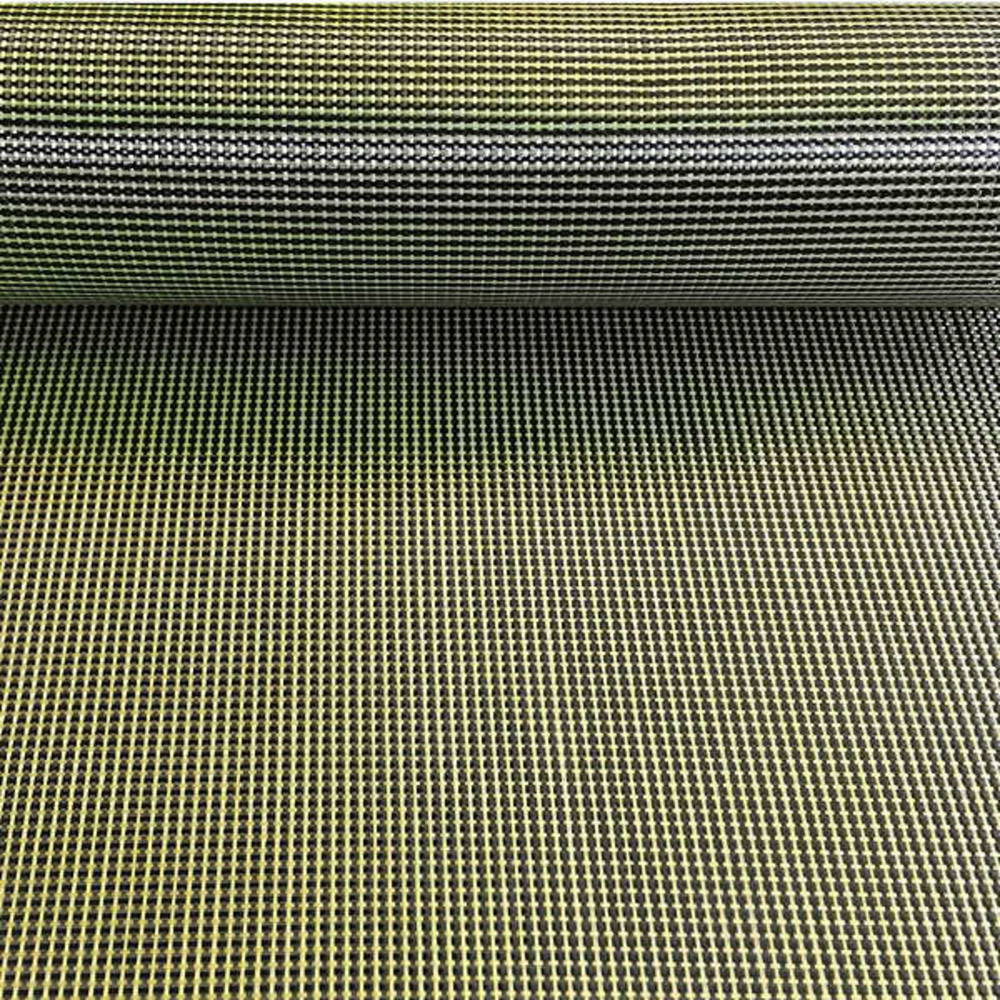
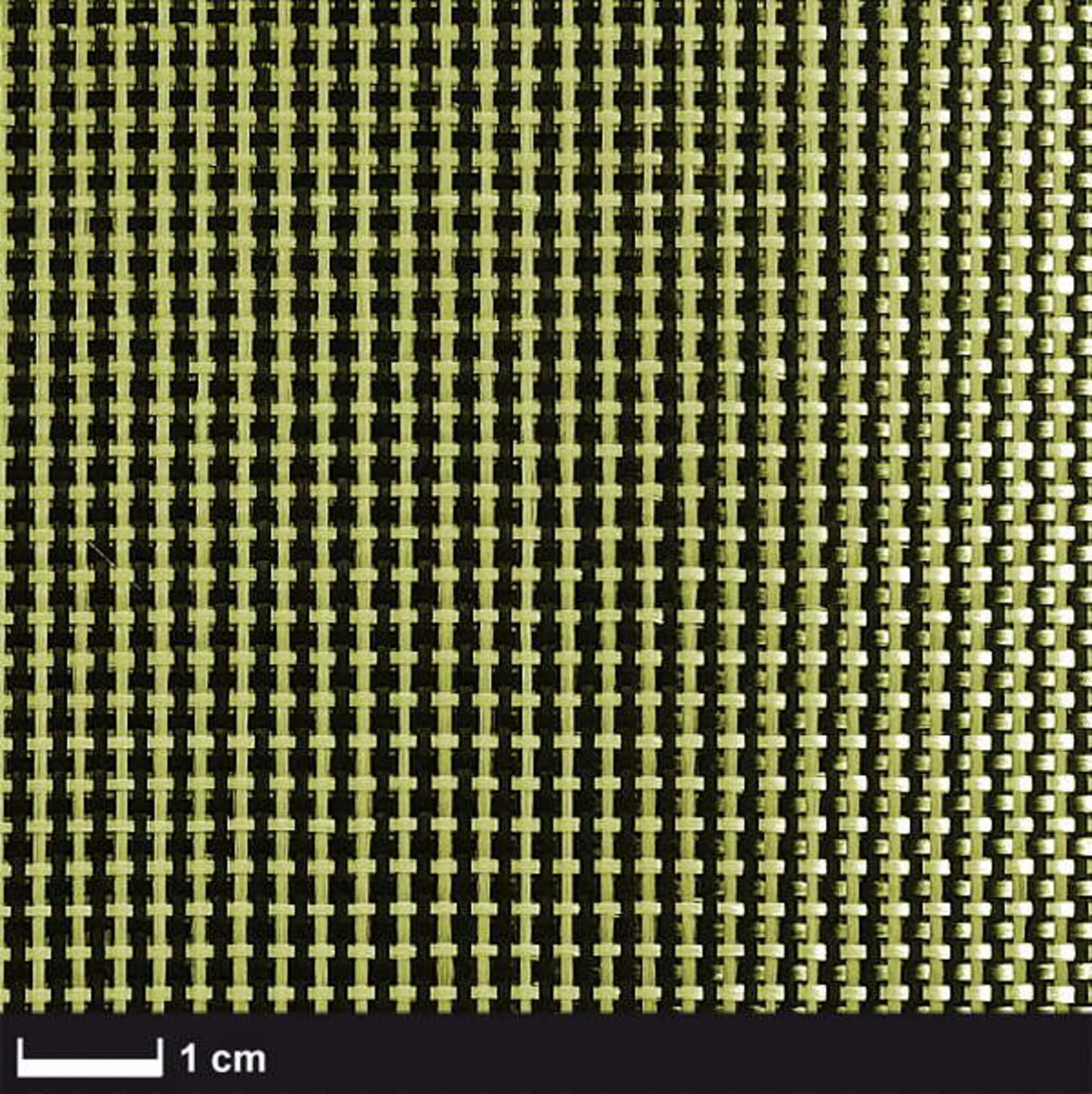
Carbon/aramid fabric Style 664 is an exceptionally lightweight hybrid fabric in plain weave. It combines fine Torayca® T300B 1k carbon fibre with Kevlar® 49 aramid fibre.
The combination of these two fibre types makes targeted use of their different properties: carbon contributes primarily to laminate stiffness, while the aramid content improves resistance to impact, shock and abrasion. The fabric is therefore an attractive alternative to pure carbon fabric where low weight and high stiffness need to be combined with increased damage and wear tolerance.
With an areal weight of only 68 g/m², the fabric is particularly suitable for very thin skins, lightweight shells, fairings and components where every gram counts.
Technical data
| Areal weight |
68 g/m² |
| Style |
664 |
| Weave |
Plain weave |
| Yarn count |
6.5 × 6.5 yarns/cm |
| Width |
100 cm |
| Carbon fibre |
Torayca® T300B, 67 tex, 1k |
| Aramid fibre |
Kevlar® 49, 42 tex |
Calculated values for hand lay-up laminates
The following values are based on an assumed fibre volume fraction of 35% and are intended as practical reference values for laminate design:
| Resin consumption |
approx. 84 g/m² |
| Calculated laminate thickness |
approx. 0.118 mm per ply |
| Calculated laminate weight |
approx. 152 g/m² |
Actual values depend on the resin system, processing method, degree of consolidation and the fibre volume fraction achieved in the finished laminate.
Why combine carbon and aramid?
Carbon and aramid fibres offer different mechanical properties and complement each other in hybrid laminates.
- Carbon fibre: high specific stiffness and strength at low weight.
- Aramid fibre: high toughness and good resistance to impact, shock and abrasion.
- Hybrid reinforcement: combines the stiffness of a carbon laminate with additional toughness and resistance to mechanical damage.
A carbon/aramid hybrid is therefore particularly useful where a pure carbon fibre laminate provides the required stiffness but additional resistance to impact loading or mechanical damage is desirable.
Advantages
- High specific stiffness: provided by the fine Torayca® T300B carbon fibres.
- Improved impact behaviour: the aramid content can improve energy absorption and damage tolerance compared with purely carbon-fibre-reinforced structures.
- Good abrasion and wear resistance: provided by the aramid fibre content.
- Distinctive hybrid appearance: visible combination of black carbon and yellow-gold aramid fibres.
Typical applications
The low areal weight makes Style 664 particularly suitable for components where weight, laminate thickness and surface quality are important:
- lightweight fairings and covers
- model aircraft and other model-making components
- drone and UAV components
- thin-walled shells and housings
- sports equipment and components
- motorsport and automotive components
- lightweight marine components
- skins for sandwich structures
- visual laminates with a distinctive carbon/aramid appearance
- components exposed to increased impact, shock or abrasion loading
For very lightweight and thin laminates
At only 68 g/m², this hybrid fabric is one of the lighter reinforcement fabrics available. It enables finely graduated laminate lay-ups and very thin skins without adding unnecessary laminate thickness with each individual ply.
This is particularly advantageous for small model components, fairings, sandwich skins and visual laminates. Several lightweight plies can also be oriented more precisely to suit the relevant load directions than a small number of heavier fabric plies.
Resin systems
For high-quality structural and visual laminates, we generally recommend a suitable epoxy resin system. Epoxy resins provide good fibre wet-out and are particularly suitable for high-quality carbon/aramid laminates.
The resin system should be selected according to component size, processing method, required pot life, temperature resistance and the mechanical requirements of the finished laminate.
Processing
The fabric can be processed by conventional hand lay-up. Vacuum processing is beneficial where particularly lightweight laminates and higher fibre volume fractions are required.
Because of its very low areal weight, the fabric should be handled carefully during cutting and lay-up to maintain the fine and uniform weave structure.
For clean and precise cutting, we recommend sharp scissors or cutting tools suitable for aramid fabrics. This helps maintain clean edges and accurate component contours.
Finishing aramid laminates
The tough nature of aramid fibres should be taken into account during finishing. Clean trimming and carefully prepared laminate edges help achieve a high-quality result, particularly on visual components.
Where possible, edges should be formed accurately during lay-up. Sharp, suitable cutting tools help produce clean contours and minimise the need for subsequent finishing.
Visual laminates
The combination of black carbon fibre and yellow-gold aramid fibre creates the distinctive appearance of a carbon/aramid hybrid fabric.
For high-quality visual surfaces, the fabric should be aligned evenly, fully wetted out and processed with minimal air entrapment. Vacuum consolidation can further improve laminate quality and fibre content.
FAQ
Why should I use this fabric instead of a pure carbon fabric?
This hybrid fabric combines the high stiffness and low weight associated with carbon fibre with the additional toughness and resistance to impact and abrasion provided by aramid. It is therefore particularly suitable for lightweight components where both stiffness and improved damage tolerance are required.
What is the main advantage of the very low 68 g/m² areal weight?
With a calculated laminate thickness of only approx. 0.118 mm per ply, very thin and lightweight laminates can be produced. This allows laminate lay-ups to be finely graduated and different fibre orientations to be combined without adding unnecessary wall thickness or weight.
Is the fabric suitable for highly loaded structural components?
Suitability depends on the complete laminate lay-up, fibre orientation, resin system, fibre volume fraction and the actual loading conditions. The fabric can form part of high-performance lightweight structures, but permissible component design values cannot be derived from the fabric weight or individual fibre properties alone.
Can the fabric be used for visual laminates?
Yes. The fine 1k carbon fibres combined with the contrasting aramid yarns create a distinctive hybrid appearance. Careful fabric alignment, thorough fibre wet-out and low-void processing are particularly important for high-quality visual components.
How should the fabric be cut?
For clean and precise cutting, sharp scissors or cutting tools suitable for aramid fabrics are recommended. This allows the lightweight fabric to be cut accurately while maintaining clean edges.
Which resin system is suitable?
For high-quality structural and visual laminates, we recommend a suitable epoxy resin system. The specific system should be selected according to the processing method, component size, temperature requirements and the required mechanical performance.











 MSDS Aramid fabrics (all)
(PDF)