Consolidate filament-wound composite components through heat shrinkage while preparing the laminate surface for subsequent bonding.
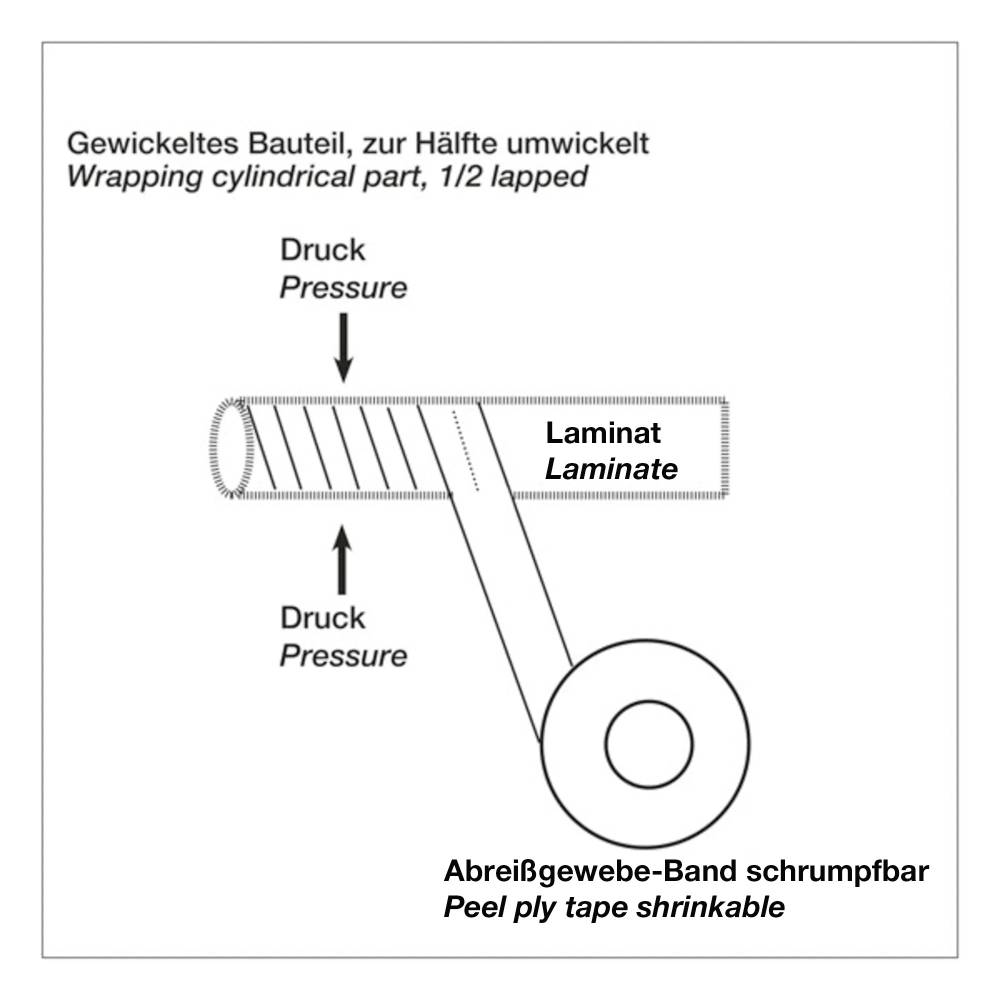
This heat-shrinkable peel ply tape is made from high-temperature-resistant polyester and is wrapped directly around the laminate. When heated, the fabric contracts and generates additional circumferential tension, helping to compact and consolidate the laminate. After curing, the tape is peeled off, leaving a uniformly textured surface.
Particularly suitable for composite tubes, profiles and other filament-wound components.
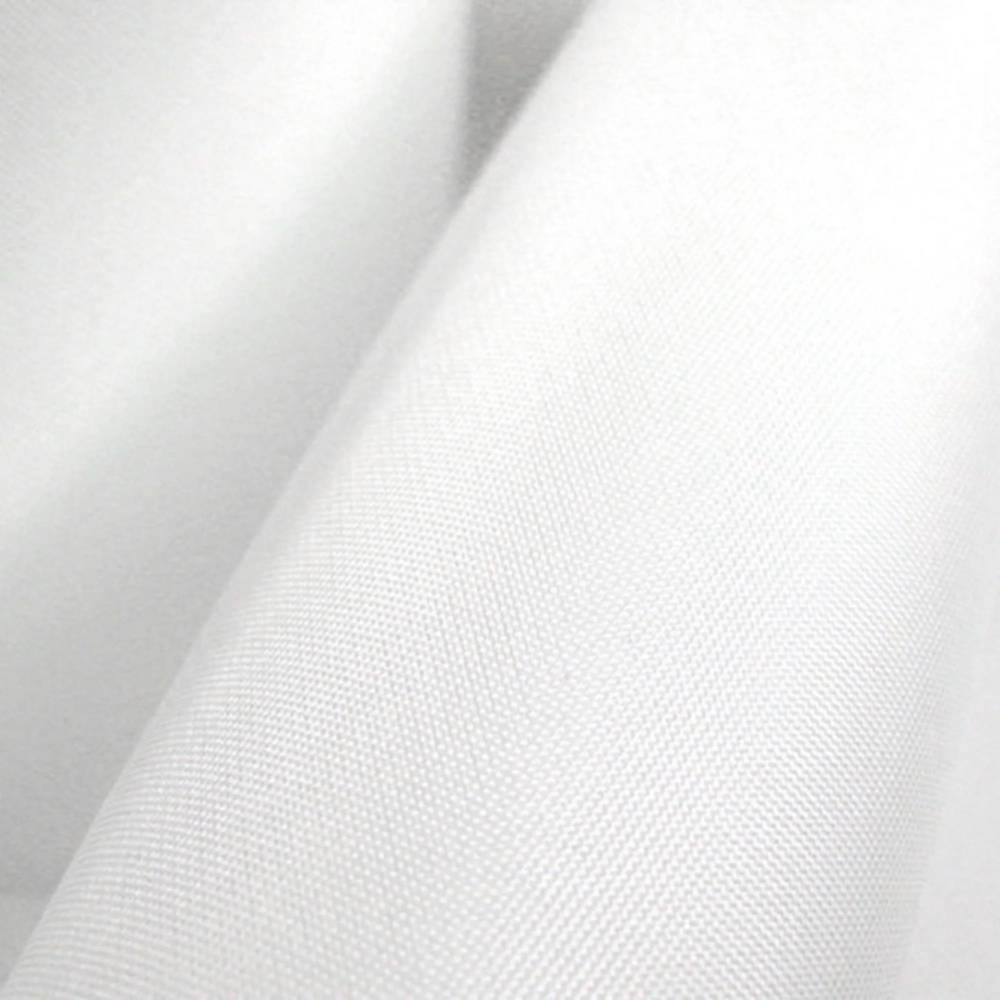
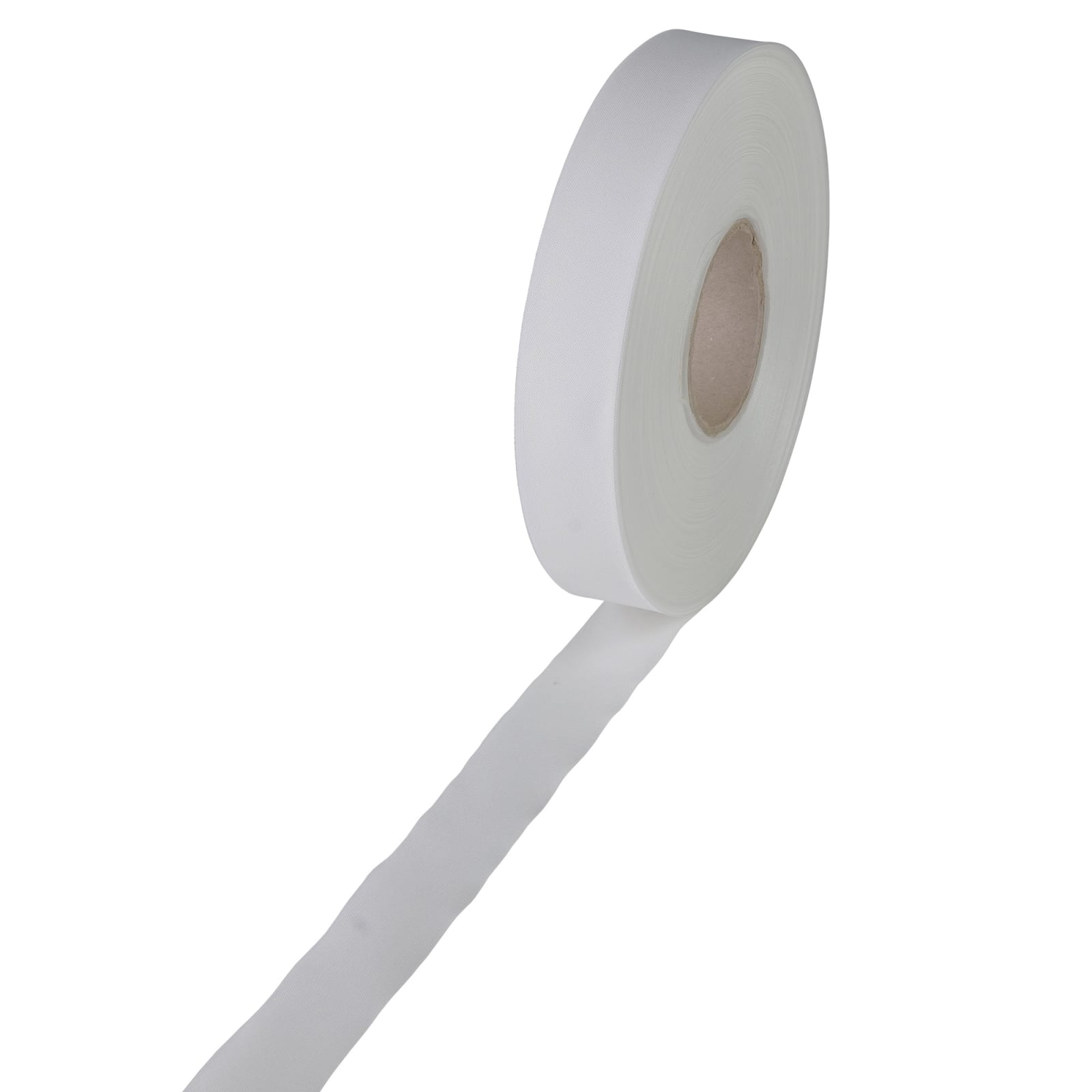
The peel ply tape is made from 100% polyester HT S in a plain weave construction, with an areal weight of 86 g/m². Its 25 mm width allows controlled spiral wrapping, even on components with relatively small diameters.
Unlike conventional peel ply, the heat-shrinkable version combines two functions: assisting laminate consolidation during thermal curing and creating a textured surface suitable for subsequent adhesive bonding.
Technical Data
| Material |
100% polyester HT S |
| Colour |
White |
| Weave |
Plain weave |
| Areal weight |
86 g/m² |
| Fabric thickness |
160 µm (0.16 mm) |
| Maximum processing temperature |
200 °C |
| Elongation at break |
Warp: 22%
Weft: 20% |
| Tensile strength |
Warp: 86 daN/5 cm
Weft: 85 daN/5 cm |
| Tape width |
25 mm |
| Roll length |
100 m |
Heat-Shrink Behaviour
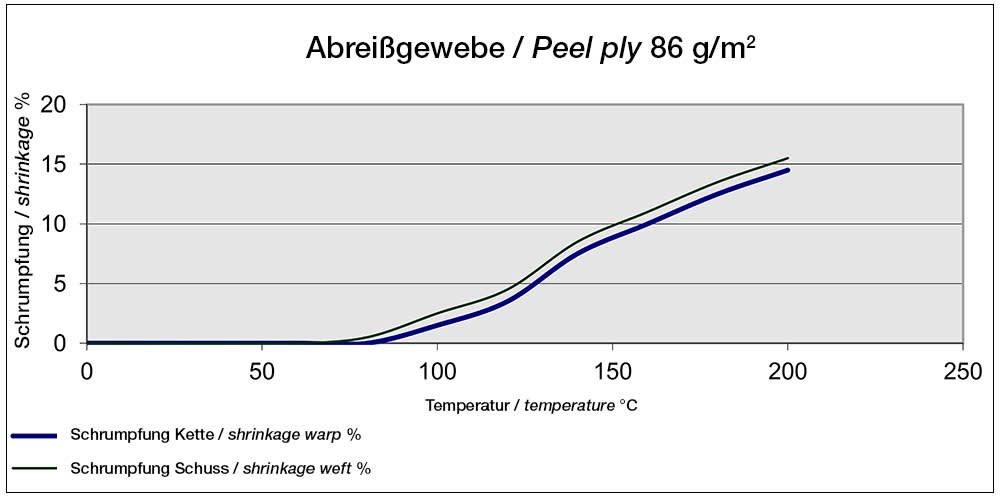
The polyester fabric starts to shrink at approximately 100 °C. Shrinkage increases with temperature and can contribute to the consolidation of the wrapped laminate.
| From approx. 100 °C |
Onset of thermal shrinkage |
| 150 °C |
Approx. 10% shrinkage |
| 200 °C |
Approx. 16% shrinkage |
The specified shrinkage values are temperature-dependent material properties. The actual degree of laminate consolidation depends on factors such as wrapping tension, component geometry, laminate lay-up and the curing temperature profile.
Benefits and Typical Applications
The main advantage of heat-shrinkable peel ply tape is its combination of thermal consolidation and surface preparation. During heat curing, the tape contracts and can help consolidate the underlying laminate plies.
Once removed, the fabric leaves a uniformly roughened surface suitable for subsequent adhesive bonding or additional laminating operations. This can reduce the need for mechanical surface preparation, such as sanding.
Typical applications:
- Manufacture and consolidation of composite tubes
- Wrapping of CFRP and GFRP profiles
- Thermal consolidation of filament-wound composite laminates
- Surface preparation for subsequent adhesive bonding
- Manufacture of composite components using epoxy and phenolic resin systems
Compatible Resin Systems
The heat-shrinkable peel ply tape is intended for use with epoxy and phenolic resin systems. It is particularly suitable for resin systems with thermal curing schedules that reach the temperature range in which fabric shrinkage occurs.
The curing temperature profile must be matched to the selected resin system and laminate construction. Particular attention should be paid to permissible processing temperatures when working with temperature-sensitive core materials, thin-walled components or composite tooling with limited thermal resistance.
Processing Guidelines
Wrapping the laminate
After completing the laminate lay-up, apply the tape as the outermost layer under suitable wrapping tension. For spiral wrapping, maintain a consistent overlap to help distribute the shrinkage forces as evenly as possible across the component.
Thermal curing
The polyester fabric starts to shrink at approximately 100 °C. This can generate additional circumferential tension, helping to compact and consolidate the laminate during curing. The actual consolidation effect depends on the initial wrapping tension and the curing temperature profile.
Peel ply removal
After the laminate has sufficiently cured and cooled, peel the tape away from the component. The fabric imprint leaves a roughened surface suitable for subsequent manufacturing operations.
Surface preparation for adhesive bonding
The surface texture produced by the peel ply provides a suitable basis for subsequent adhesive bonding. Before applying the adhesive, check surface cleanliness and condition, and follow the surface preparation requirements specified for the selected adhesive system.
Temperature limits and dimensional stability
Shrinkage forces may cause distortion in thin-walled components or parts with sensitive geometries. Wrapping tension and curing temperature should therefore be evaluated on a representative test component before series production. The maximum service temperature of the fabric during processing is 200 °C.
Frequently Asked Questions
How does heat-shrinkable peel ply tape differ from conventional peel ply?
Conventional peel ply is primarily used for laminate surface preparation. Heat-shrinkable peel ply tape also contracts when heated and can therefore assist laminate consolidation during thermal curing.
Can the tape also be used for room-temperature curing?
The tape can also be used as a conventional peel ply. However, the additional consolidation effect resulting from heat shrinkage only occurs at elevated temperatures, starting at approximately 100 °C.
Can the resulting surface be bonded directly?
The peel ply leaves a textured laminate surface that is generally well suited for subsequent adhesive bonding, provided it meets the requirements of the selected resin and adhesive system.
Further Information
For other peel ply fabrics and tapes designed for different applications, please visit our peel ply product range.












 MSDS Peel ply (all) (PDF)