Prepare narrow bonding and joining areas with a uniform, textured laminate surface – minimising the need for mechanical abrasion.
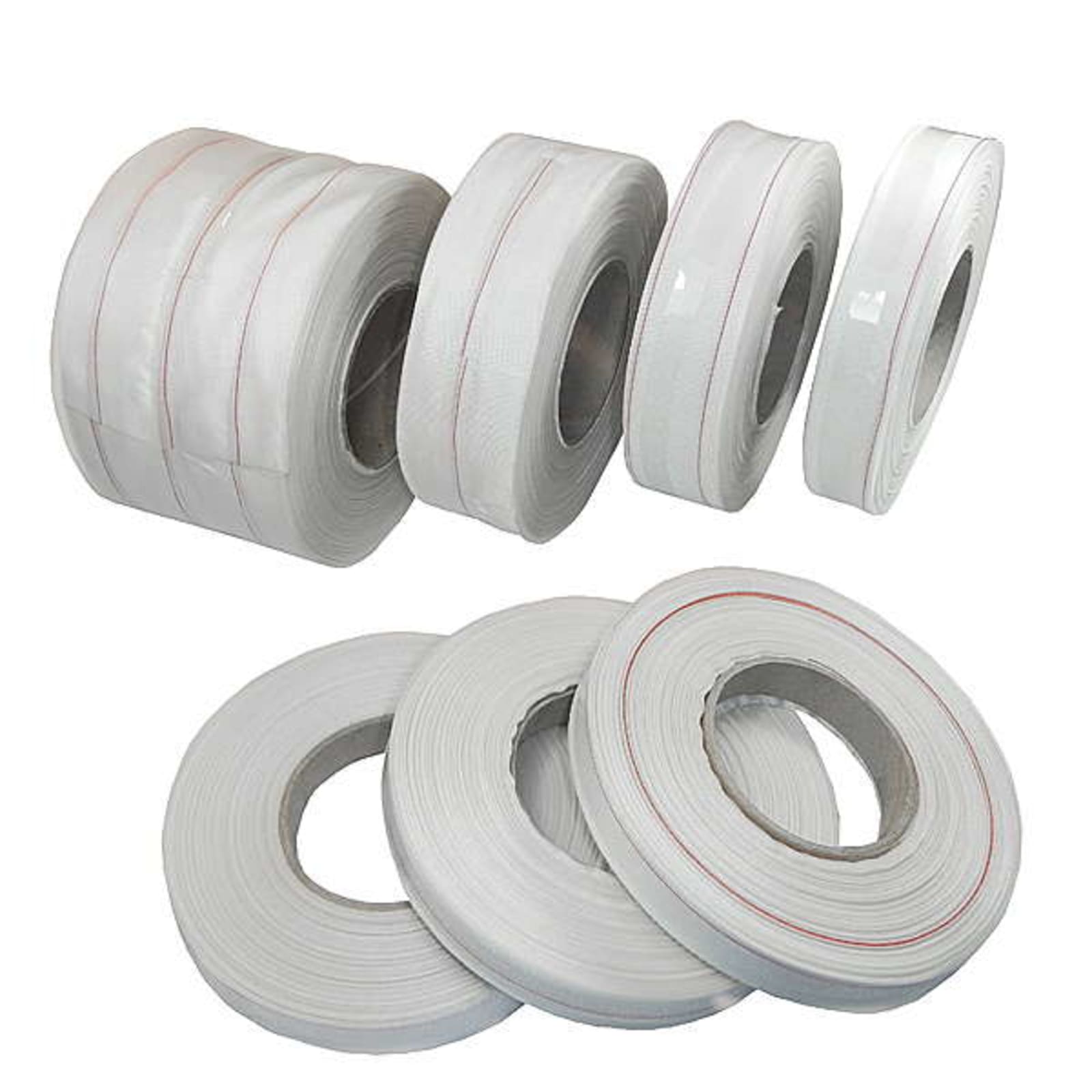
These cleaned and heat-treated polyamide 6.6 peel ply tapes are applied as the final layer during lamination and removed after curing. They leave a uniformly textured surface particularly suitable for subsequent adhesive bonding. Available in widths from 20 to 100 mm, the tapes allow precise surface preparation without covering unnecessarily large areas of the laminate.
The peel ply tapes are made from 100% polyamide 6.6 (nylon) in plain weave construction, with an areal weight of 95 g/m². The fabric is cleaned and heat-treated during manufacture to reduce residues that could adversely affect the adhesion of subsequent bonded joints.
During lamination, the tape is placed onto the uncured, resin-wetted laminate surface and fully impregnated with resin. Once the laminate has cured, the peel ply is removed, leaving a uniformly textured surface prepared for subsequent adhesive bonding.
The narrow tape widths are particularly suitable for bonding flanges, overlap joints, reinforcement attachment areas and other localised sections of composite components.
Technical Data
| Material |
100% polyamide 6.6 (nylon) |
| Treatment |
Cleaned and heat-treated |
| Weave |
Plain weave |
| Areal weight |
95 g/m² |
| Thread count |
Warp / weft: 19 / 19 threads/cm |
| Fabric thickness |
Minimum 0.17 mm |
| Softening point |
235 °C |
| Melting point |
250 °C |
| Tensile breaking force |
Warp: minimum 1040 N
Weft: minimum 930 N
Test standard: ČSN EN ISO 13934-1 |
Note: The softening and melting points are material properties and must not be interpreted as permissible processing temperatures.
Benefits and Typical Applications
- Targeted surface preparation: Narrow tapes for bonding flanges, joining areas and local reinforcements.
- Uniform surface texture: Removing the peel ply leaves a consistent surface roughness for subsequent processing.
- Cleaned fabric: The treatment reduces residues that could interfere with adhesive bonding.
- Reduced mechanical surface preparation: When correctly processed, the peel ply can eliminate the need for extensive sanding of the prepared areas.
- Flexible application: Five variants with different tape widths and roll lengths.
Compatible Resin Systems
The peel ply is suitable for use with epoxy, vinyl ester and polyester resin systems.
It is particularly useful in the manufacture of GRP and CFRP laminates where selected surface areas need to be prepared for subsequent adhesive bonding or secondary laminating operations.
Available Variants
| Tape width |
Roll length / Item No. |
| 20 mm |
100 m / 2500201 |
| 30 mm |
100 m / 2500301 |
| 50 mm |
100 m / 2500501 |
| 50 mm |
200 m / 2500502 |
| 100 mm |
100 m / 2501001 |
Processing Guidelines
Apply the peel ply tape to the uncured laminate surface and ensure complete resin wet-out. Avoid wrinkles and maintain full contact between the fabric and the underlying laminate.
Leave a small section of tape extending beyond the laminate surface to provide a tab for removal. Once the laminate has fully cured, peel off the fabric as evenly as possible.
Protect the exposed surface from dust, grease, moisture and other contaminants until further processing. Ideally, remove the peel ply shortly before the subsequent bonding operation.
Important for structural bonding: Surface roughness created by peel ply alone does not guarantee adequate bond strength. Follow the surface preparation requirements specified by the resin and adhesive manufacturers. For safety-critical applications, suitability should be verified by appropriate adhesion or bond-strength testing.
Frequently Asked Questions
Can peel ply remain in the laminate?
No. Peel ply is a temporary processing aid used for surface preparation. It is not intended to remain in the finished component as a structural reinforcement layer.
Does the surface need to be sanded after removing the peel ply?
The resulting surface texture generally eliminates the need for additional mechanical abrasion, provided the peel ply has been correctly processed and the surface meets the requirements of the subsequent bonding operation.
Why is cleaned peel ply beneficial?
Cleaning reduces potential residues from fabric manufacture. This is particularly important for composite surfaces intended for subsequent adhesive bonding or coating.












 MSDS Peel ply (all) (PDF)