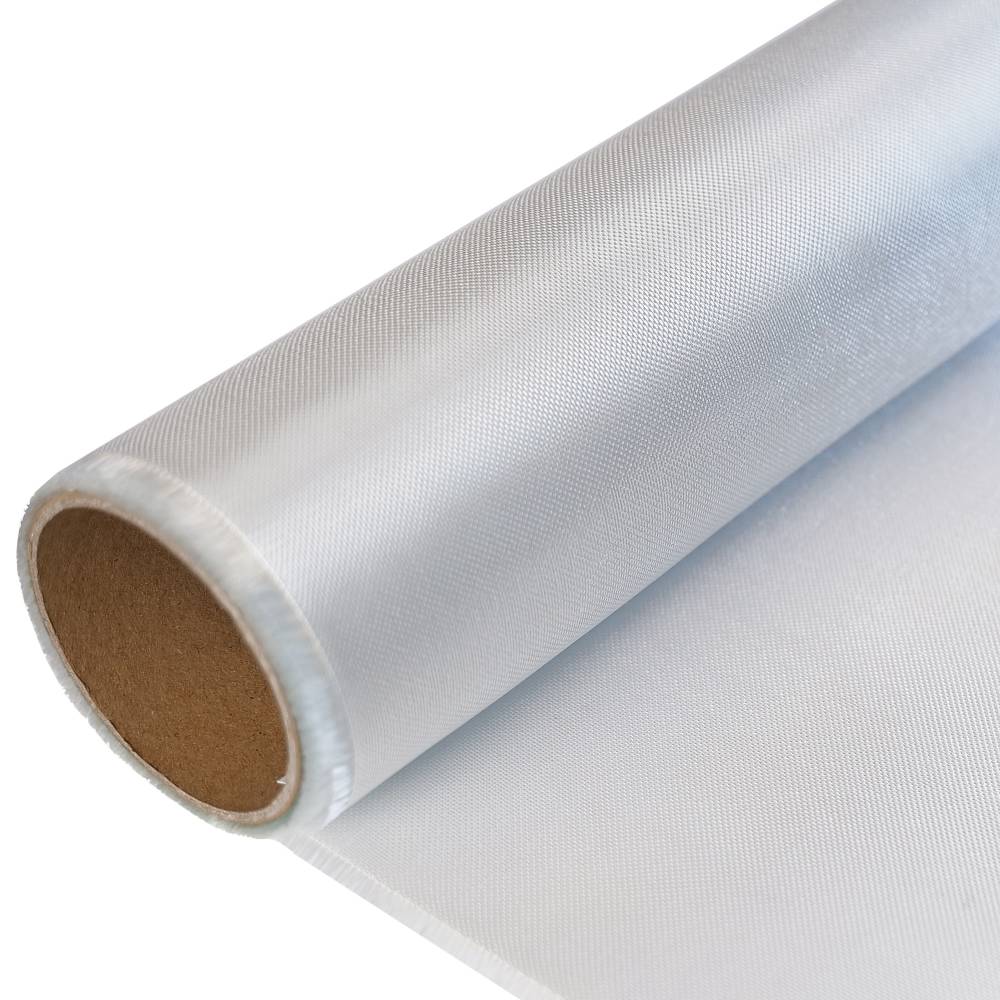
Lightweight 80 g/m² E-glass fabric in plain weave for sandwich components, coatings, thin GRP components and panels.
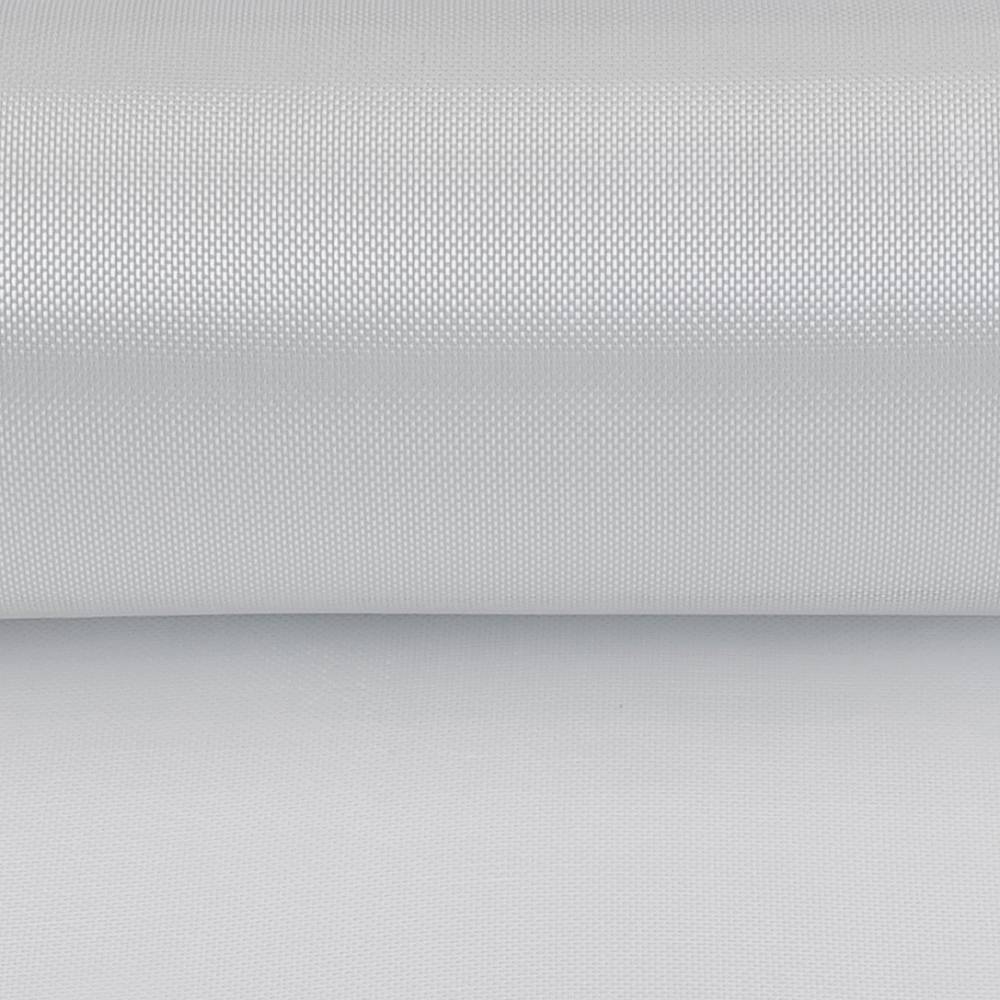
International Style 1610 (formerly Interglas 90070) with FK 144 finish. The plain weave provides good dimensional stability, helping the fabric retain its shape during cutting and handling. The 103 cm width is suitable for a wide range of small to medium-sized composite components.
MATERIAL COMPLYING WITH AVIATION STANDARD
Special offer: 33% off first-quality material.
This price reduction is part of a sales promotion and is not due to quality defects.
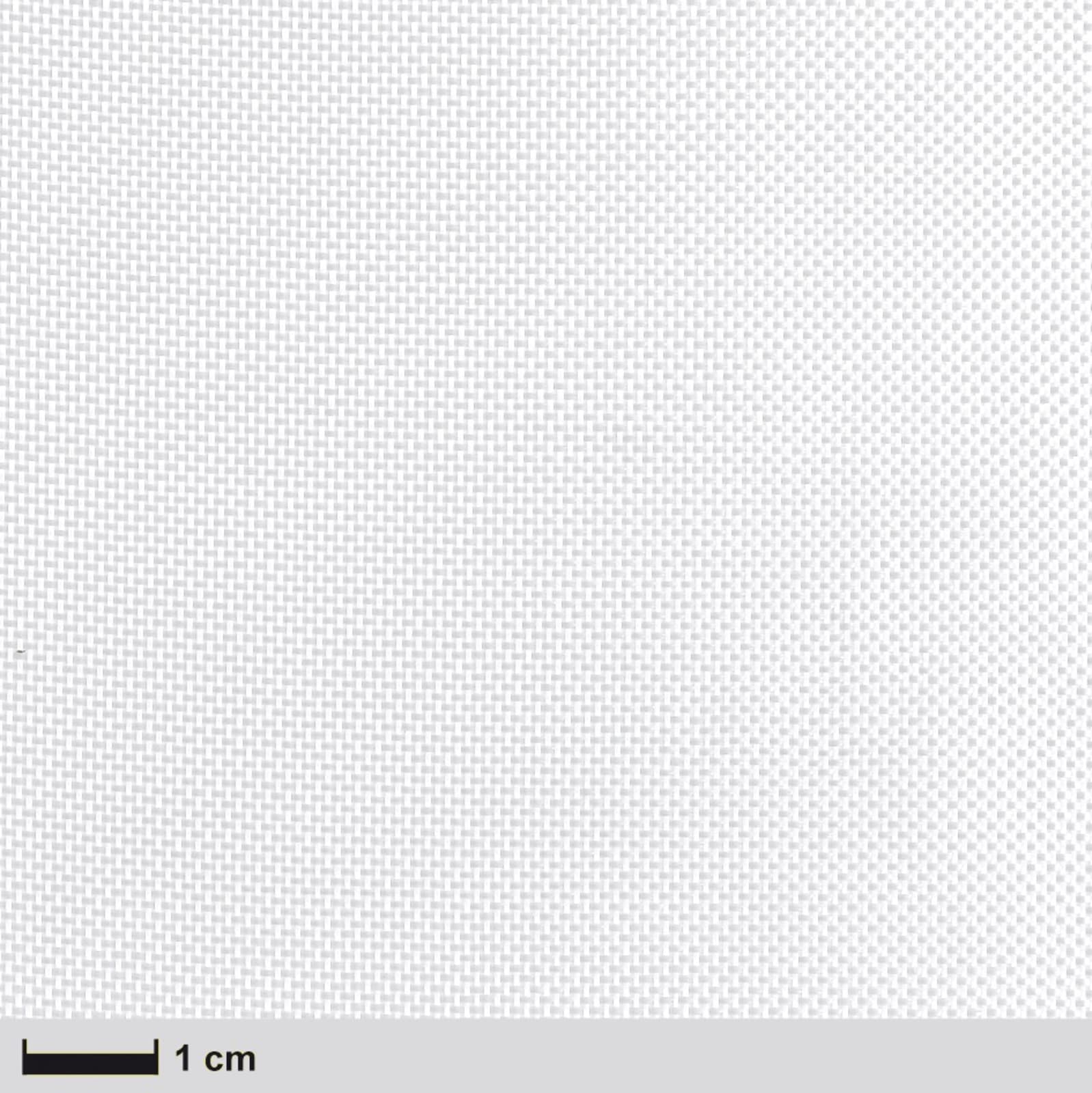
International Style 1610 (formerly Interglas 90070) with FK 144 finish is a lightweight E-glass fabric in plain weave. With an areal weight of 80 g/m², it is suitable for thin glass-fibre laminates, coatings and facing plies where a low laminate build-up is required together with good handling stability of the dry fabric.
| International Style |
1610 (formerly Interglas 90070) |
| Fibre type |
E-glass |
| Areal weight |
80 g/m² |
| Finish |
FK 144 |
| Weave |
Plain weave |
| Yarn, warp / weft |
EC 9-34 / EC 9-34 |
| Thread count, warp / weft |
12.0 / 11.5 threads/cm |
| Width |
103 cm |
Fabric benefits
With an areal weight of 80 g/m², International Style 1610 allows lightweight and thin glass-fibre laminates to be produced. The same EC 9-34 yarn is used in both warp and weft, while the similar thread counts of 12.0 and 11.5 threads/cm provide a largely balanced fibre distribution in the two principal directions.
The plain weave has a high number of yarn interlacings, providing good dimensional stability. The fabric therefore retains its shape comparatively well during cutting, handling and positioning, making it particularly suitable for flat and gently curved components.
The FK 144 finish and its classification as a material complying with aviation standard make this fabric particularly relevant for applications requiring a correspondingly specified glass fabric.
Applications
The 80 g/m² glass fabric is suitable for lightweight sandwich components, coatings, small GRP components and panels. Its low areal weight allows thin facing and reinforcement plies to be built up.
Typical applications:
- Sandwich components and lightweight facing plies
- Coatings and surface reinforcement
- Small GRP components
- Thin GRP panels
- Lightweight structures and model making
- Applications requiring a material complying with aviation standard
Compatible resin systems
The glass fabric can be processed with suitable epoxy, polyester and vinyl ester resins. For thin laminates, low-viscosity laminating resins are advantageous as they facilitate uniform wet-out of the fabric.
For aviation applications, the fabric must be used with the resin system specified or approved for the particular application and in accordance with the applicable processing requirements.
Calculated data for hand laminates with 35% fibre volume fraction
| Resin consumption |
63 g/m² |
| Laminate thickness |
0.088 mm |
| Laminate weight |
143 g/m² |
The resin consumption, laminate thickness and laminate weight are calculated guide values for a hand laminate with a fibre volume fraction of 35%. Actual values depend on factors including the resin system, processing method, compaction and laminate construction.
Benefits of the 103 cm width
The 103 cm working width is particularly suitable for small to medium-sized components, panels and sandwich structures. Components within the available fabric width can be laid up without an additional longitudinal joint.
For narrower components, the width also allows efficient nesting of cut pieces and good material utilisation.
Technical notes
Plain weave
The high number of yarn interlacings gives the plain weave good dimensional stability. This helps minimise distortion during cutting and positioning.
Component geometry
The dimensionally stable plain weave is particularly suitable for flat and gently curved geometries. For more complex three-dimensional shapes, a comparable twill-weave fabric generally provides better drapability.
Resin application
Apply the resin evenly and in a quantity appropriate for the fabric. Excess resin increases laminate weight and thickness without increasing fibre content or the reinforcement contribution provided by the fibres.
Sandwich structures
The fabric can be used for lightweight skins in sandwich structures. The required ply schedule depends on the core material, component geometry and mechanical loading.
Aviation applications
For aviation applications, the applicable material, process and approval requirements for the specific component and laminate construction must be observed.












 MSDS Glass fabric, tapes, braided sleeves, rovings, yarns, chopped strands (PDF)