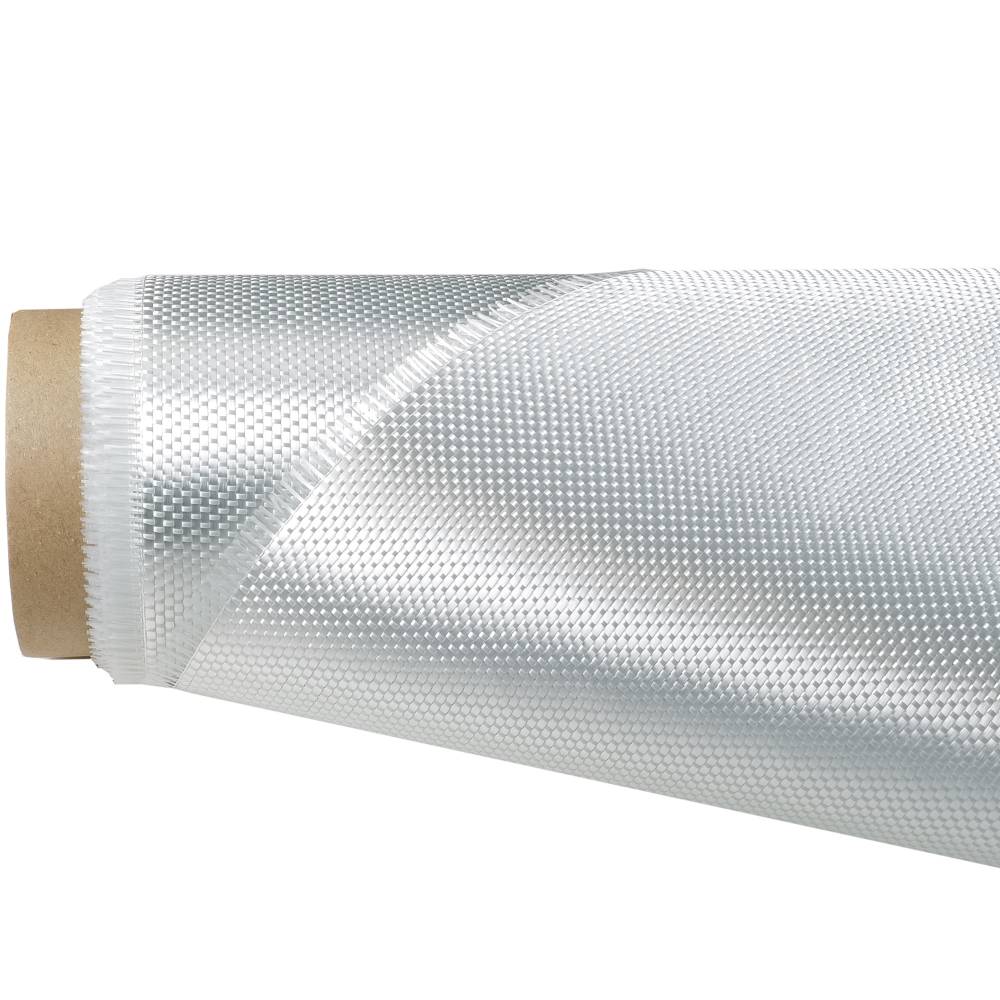
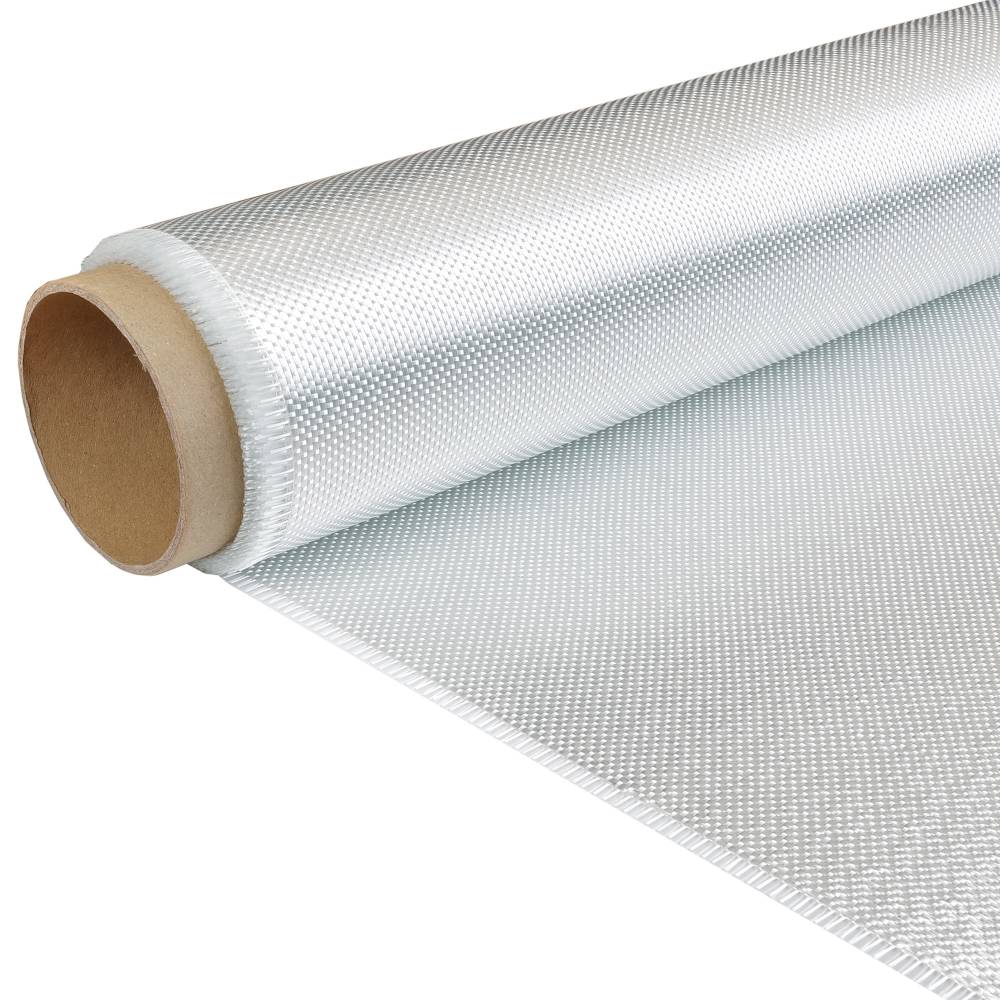
Heavy warp-reinforced (unidirectional) E-glass fabric with an areal weight of 425 g/m² for highly loaded structural components with a pronounced principal load direction.
Interglas 92146 with FK 144 finish. The majority of the reinforcing fibre is concentrated in the warp direction, providing a high fibre contribution per ply along the principal load path. Particularly suitable for spars, spar caps, longitudinal reinforcement and other load-bearing GFRP structures requiring high strength and stiffness predominantly in one direction.
MATERIAL ACCORDING TO AVIATION STANDARD
Interglas 92146 is a warp-reinforced (unidirectional) E-glass fabric for structural composite applications with directional load transfer. With an areal weight of 425 g/m², each ply introduces a high proportion of reinforcing fibre in the warp direction. This allows greater structural laminate thicknesses to be built with fewer individual plies than with lighter warp-reinforced fabrics.
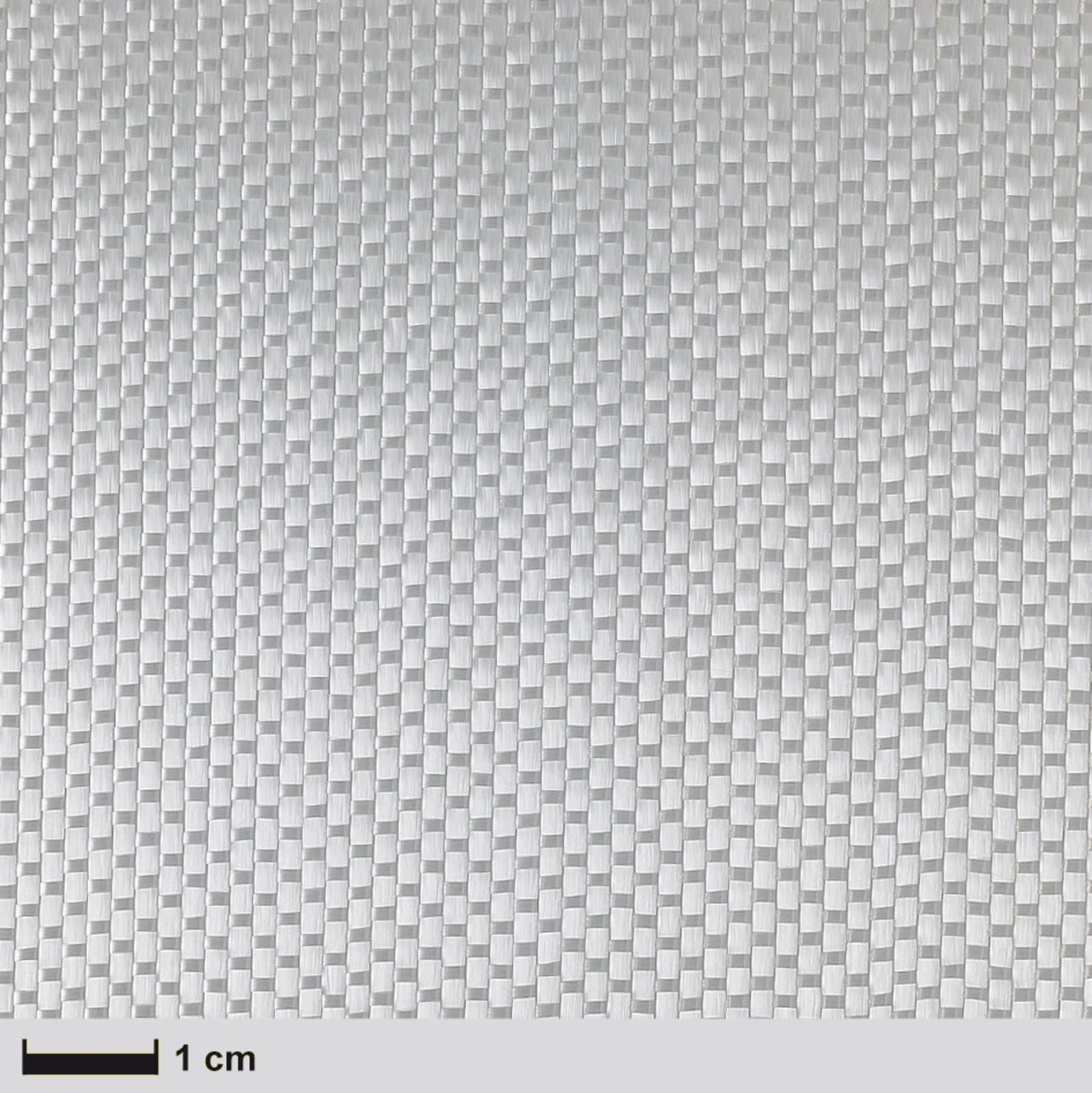
The term “unidirectional” refers to the pronounced principal reinforcement direction. Interglas 92146 is not a pure UD non-crimp reinforcement: weft yarns bind and stabilise the warp yarns, producing a fabric structure that can be cut, positioned and laminated reliably.
| Interglas |
92146 |
| WLB No. |
8.4525.60 |
| Fibre type |
E-glass |
| Areal weight |
425 g/m² |
| Finish |
FK 144 |
| Fabric construction |
Warp-reinforced (unidirectional) |
| Warp yarn |
EC 9-136 × 5 t0 |
| Weft yarn |
EC 9-68 |
| Thread count, warp / weft |
5.5 ends/cm / 6.3 picks/cm |
| Width |
100 cm |
Benefits of the Fabric
The structural emphasis of Interglas 92146 is clearly in the warp direction. The substantially heavier warp yarn concentrates a large proportion of the reinforcing fibres along this direction. This makes the fabric suitable for components subjected predominantly to high tensile loads and requiring high strength and stiffness along a defined load axis.
The areal weight of 425 g/m² provides a high fibre contribution per ply. Compared with the lighter 220 g/m² warp-reinforced fabric, greater laminate thicknesses can be built with fewer individual plies. This can reduce lay-up effort particularly in substantial spar caps, longitudinal reinforcement and other load-bearing areas.
Despite the strongly directional fibre distribution, the material remains easy to handle as a woven fabric. The weft yarns hold the heavy warp yarns in position and facilitate cutting, handling and placement of the reinforcement plies.
Applications
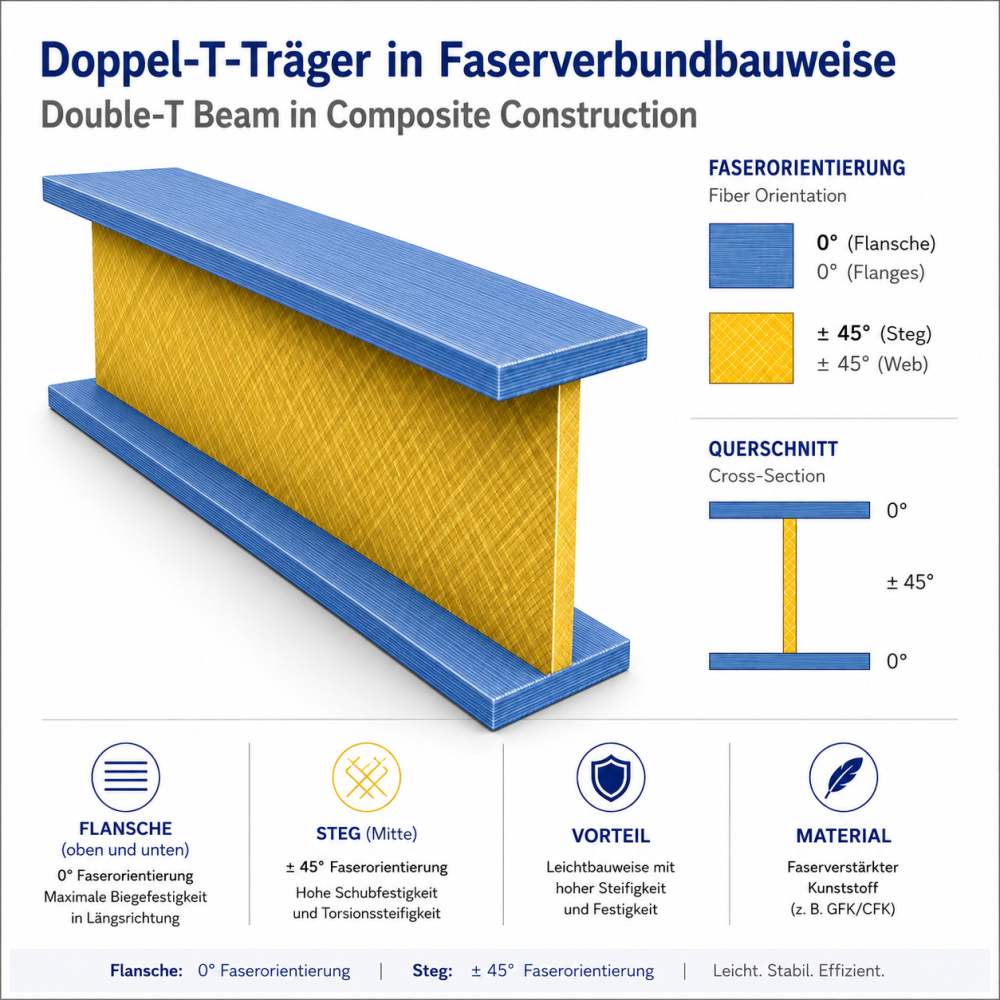
Interglas 92146 is intended for structural components requiring a high fibre contribution concentrated along a principal load direction. The warp direction forms the primary reinforcement direction and must therefore be aligned












 MSDS Interglas Glass fabric (PDF)