Use longer carbon fibre segments for larger forged carbon components and reinforced compression-moulding compounds.
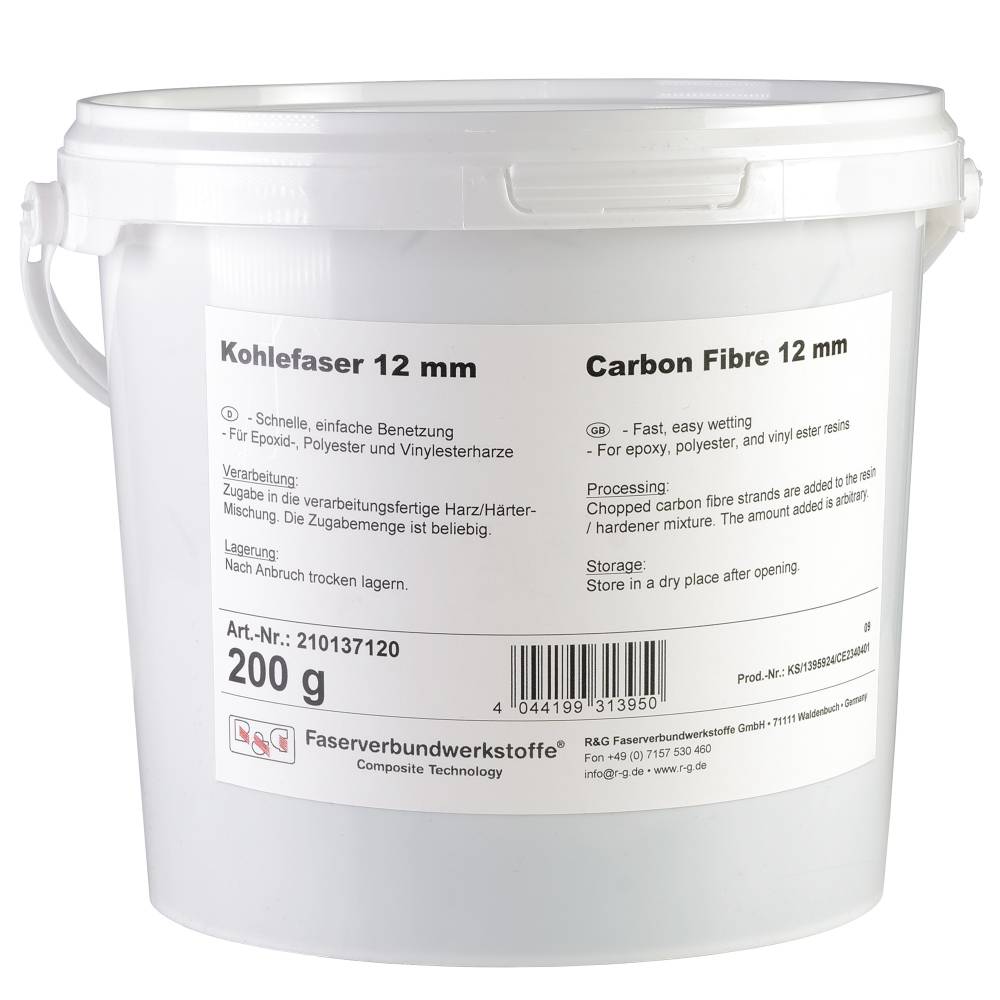
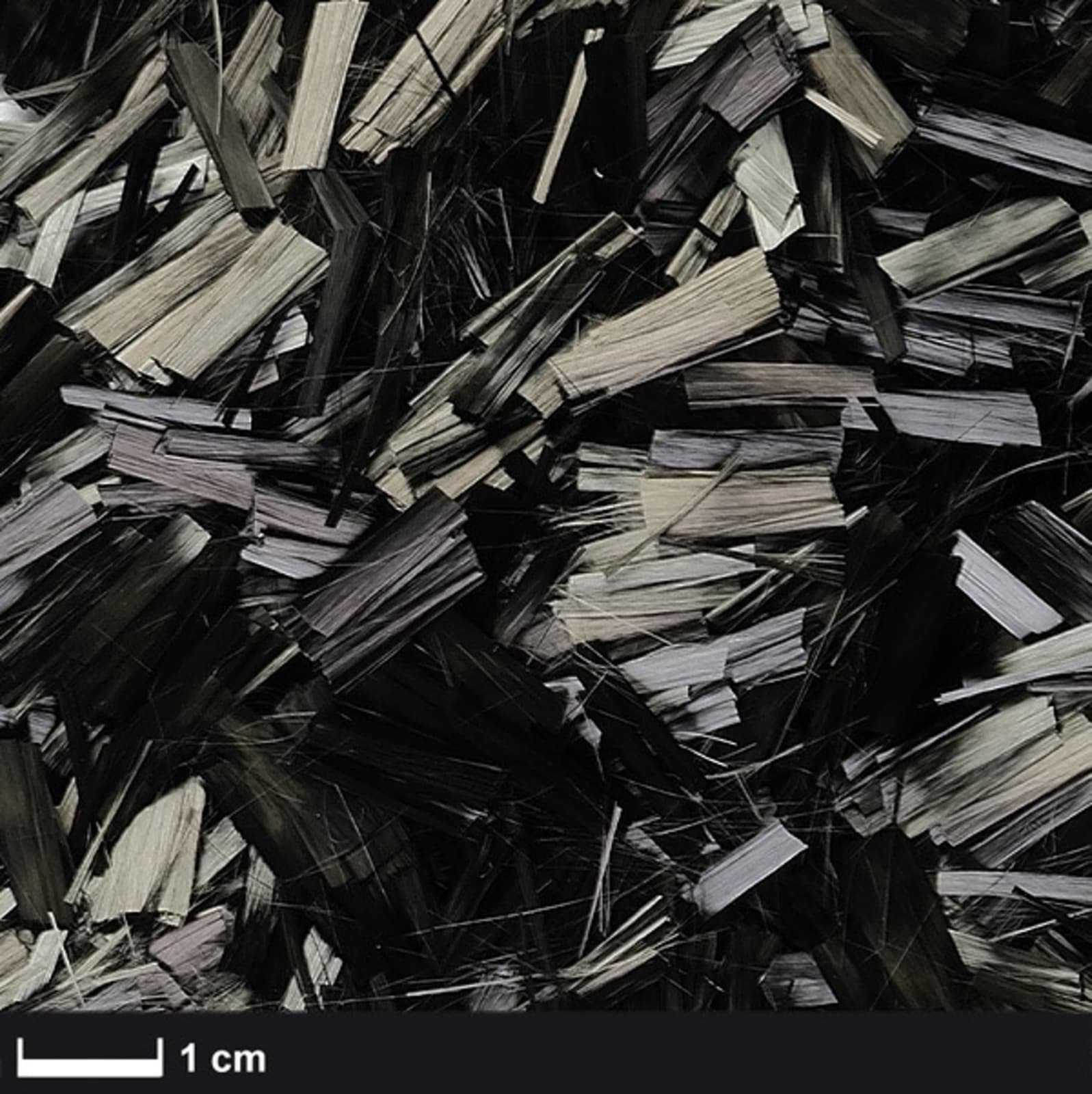
With a cut length of 12 mm, these chopped carbon fibres are intended for moulded parts with sufficient space to accommodate longer fibre bundles. When properly wetted out, distributed and consolidated, they can contribute to the mechanical reinforcement of resin systems. This grade is particularly suitable for users producing larger compression-moulded parts or short-fibre composites incorporating longer fibre segments.
The chopped carbon fibres are produced from recycled feedstock comprising different high-tensile (HT) carbon fibre grades. According to the supplier, the source material includes tow sizes of 3K, 6K, 12K, 24K, 48K and 50K. The material is not specified as a single fibre grade, and the composition of the feedstock blend is not guaranteed to remain constant.
Compared with shorter chopped fibres, 12 mm segments require greater attention to fibre distribution and mould filling. In narrow sections, tight radii or highly detailed mould cavities, longer fibre bundles may restrict uniform placement. However, where component geometry permits, their greater length can provide an increased effective embedded fibre length within the resin matrix.
Technical Data
| Material |
Recycled HT carbon fibres, blend of different source grades |
| Cut length |
12 ± 1 mm, manufacturer's specification |
| Source tow sizes |
3K, 6K, 12K, 24K, 48K and 50K; proportions may vary |
| Single-filament diameter |
7 ± 2 µm, manufacturer's average value |
| Fibre density |
1.7–2.0 g/cm³, range stated in the technical data sheet |
| Bulk density |
0.50 ± 0.05 kg/dm³ |
| Sizing content |
1.4 ± 0.6%, manufacturer's specification |
| Carbon content |
94% average, greater than 92% minimum according to the data sheet |
| Fibre tensile strength |
3,500 MPa average, 3,000 MPa minimum according to the data sheet |
| Fibre tensile modulus |
230 GPa average, 200 GPa minimum according to the data sheet |
| Fibre elongation at break |
1.5% average, 1.2% minimum according to the data sheet |
| Suitable resin systems |
Epoxy, polyester and vinyl ester resins; verify compatibility and processing suitability |
Source of numerical values: R&G technical data sheet, Chopped Carbon Fibres 12 mm, July 2022. The mechanical properties refer to the source fibres and not to finished composite components. According to the current supplier information, values corresponding to Toray T300 serve as technical reference data. Fibre composition may vary, and these figures do not constitute batch-specific test results.
Mechanical Properties and Limitations
Longer short fibres can support the transfer of mechanical loads when properly embedded in the resin matrix. In addition to fibre length, important factors include fibre-matrix adhesion, actual fibre orientation and the fibre content of the finished composite.
The 12 mm grade provides longer fibre segments than the 3 mm and 6 mm versions. However, this does not automatically result in higher component strength. Inadequate wet-out, uneven distribution or unsuitable mould geometry may offset potential benefits through void formation, fibre accumulation or resin-rich regions.
Components with specified mechanical performance requirements therefore need appropriate structural design and validation testing on representative finished composite specimens.
Applications
The 12 mm grade is particularly suitable for larger forged carbon components, fibre-reinforced compression-moulding compounds and technical mouldings with appropriate wall thicknesses and cross-sections. The fibres can also be used as local short-fibre reinforcement within more complex composite structures.
In decorative carbon components, the longer fibre segments produce a different visual pattern from shorter chopped fibres. The final appearance also depends on the width of the source fibre bundles, their distribution and the surface finishing process.
Processing in Compression Moulds
To produce fibre-reinforced moulding compounds, combine the chopped carbon fibres with a suitable resin system. For two-component resins, first thoroughly mix resin and hardener at the specified ratio. Then introduce the fibres gradually, ensuring adequate wet-out.
For larger forged carbon components, the fibre-filled compound can be placed into a prepared mould cavity and consolidated under suitable pressure. Material placement should minimise fibre accumulation and trapped air. Particular attention should be paid to narrow transitions to ensure that the longer fibre bundles can be distributed adequately.
As fibre loading increases, the flow behaviour of the compound changes. Excessive fibre content may impair complete mould filling and promote defects. Suitable moulding pressure, resin viscosity and working time must therefore be matched to the component geometry and resin system.
For mechanically loaded components, preliminary test specimens or representative trial parts should be manufactured and assessed for fibre distribution, void content and mechanical strength.
Comparison with Shorter Cut Lengths
The 12 mm grade is primarily intended for applications where longer fibre segments can be accommodated within the component geometry.
For medium-sized sections and moulding compounds that are generally easier to distribute, 6 mm chopped carbon fibres may be preferable. For smaller mould features and thinner fibre-filled layers, 3 mm chopped carbon fibres can offer processing advantages.
Frequently Asked Questions (FAQ)
Are 12 mm chopped carbon fibres inherently stronger than 6 mm fibres?
No. Greater fibre length may improve load transfer under suitable conditions. However, the strength of the finished component also depends on fibre content, fibre orientation, fibre-matrix adhesion and processing quality.
Why are longer fibres more difficult to process in small moulds?
Longer fibre bundles may interfere with uniform distribution in narrow sections and tight radii. This can result in local fibre accumulation or resin-rich areas. Shorter cut lengths are therefore often more suitable for small or intricate component geometries.
Are the mechanical properties identical from batch to batch?
The source material contains different HT fibre grades and tow sizes. The reference values stated in the technical data sheet therefore do not represent individually verified properties for every production batch. For applications requiring defined performance, batch-specific suitability should be verified.
Storage and Safety
Store the fibres in a dry environment protected from contamination after opening. Minimise exposure to fibre dust during processing and use suitable eye, skin and respiratory protection. As carbon fibres are electrically conductive, prevent loose fibres and dust from entering electrical installations and sensitive electronic equipment.












 MSDS Carbon fibre strands 3 mm (PDF)