Chopped strand mat 300 g/m², width 127 cm
USA: width 50", weight 8.8 oz/yd²
Universal glass fibre mat for general laminating work.
With a calculated laminate thickness of approx. 0.77 mm per layer, the 300 g/m² grade offers a good balance of layer build-up, resin absorption and handling – a versatile standard quality for a wide range of GRP applications.
Glass fibre mat 300 g/m²
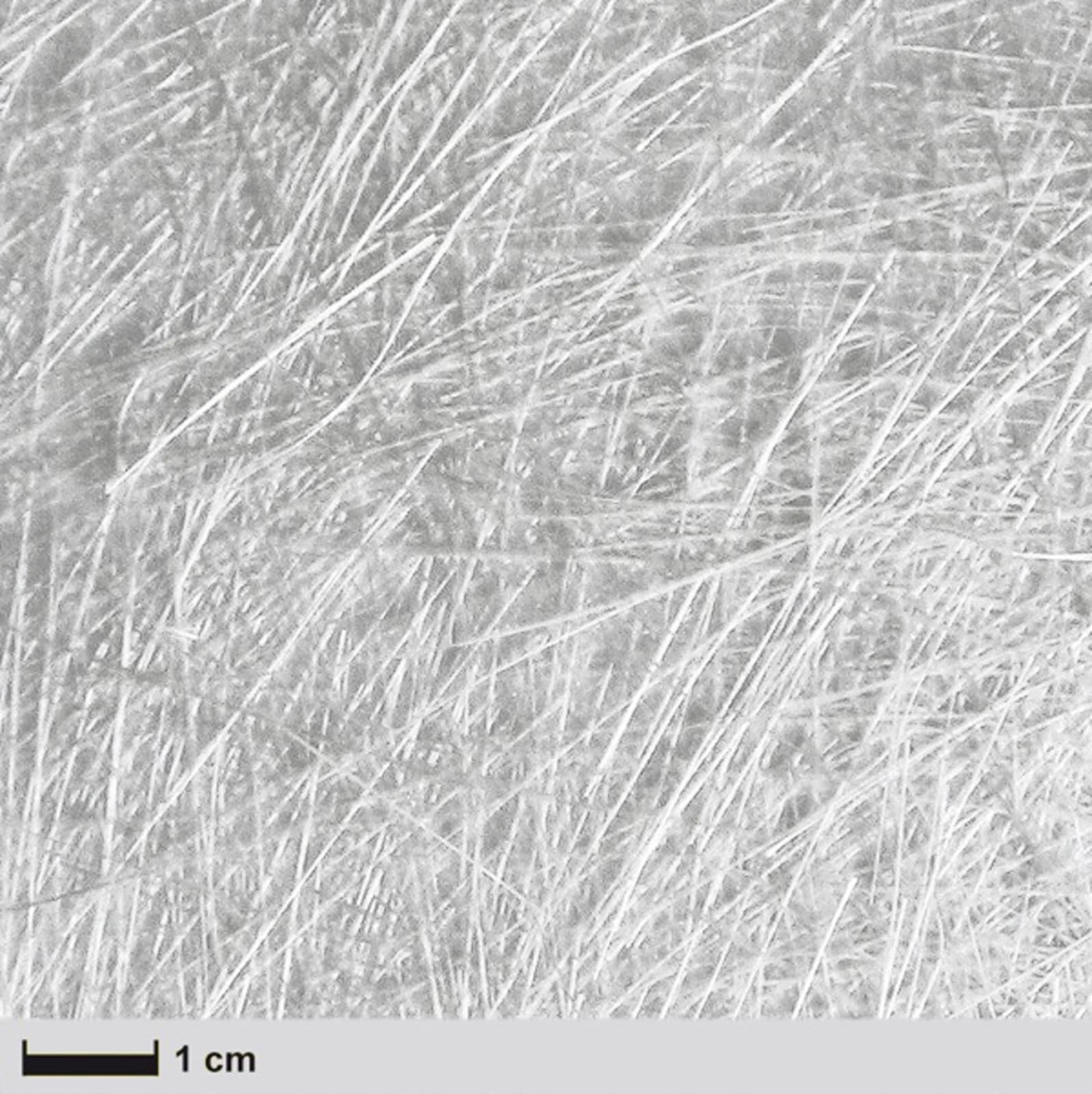
Powder-bound glass fibre mat made from chopped, randomly oriented glass fibres. The fibre arrangement provides largely direction-independent reinforcement across the surface. The mat wets out easily and is particularly suitable for conventional hand lay-up processing.
At 300 g/m², this is the universal grade within the product range. It combines efficient laminate build-up with good handling and is suitable for most general laminating work, including moulds, tanks, panels, boatbuilding, automotive parts and repairs.
When is 300 g/m² the right choice?
- as a universal glass fibre mat for general laminating work
- for medium laminate thicknesses
- for moulds, panels, tanks and repairs
- for a good balance between handling and efficient layer build-up
- when neither particularly fine nor particularly rapid thickness build-up is required
Which glass fibre mat should I choose?
| Area weight | Laminate thickness per layer* | Recommendation |
| View glass fibre mat 225 g/m² → | approx. 0.58 mm | Thinner laminates, finely controlled layer build-up, smaller components and repairs |
| 300 g/m² | approx. 0.77 mm | Universal standard grade for general laminating work |
| View glass fibre mat 450 g/m² → | approx. 1.15 mm | Greater laminate thicknesses and faster material build-up with fewer layers |
* Calculated value at 15 vol.% fibre content. The actual laminate thickness may vary depending on resin quantity, processing and compaction.
Processing tips
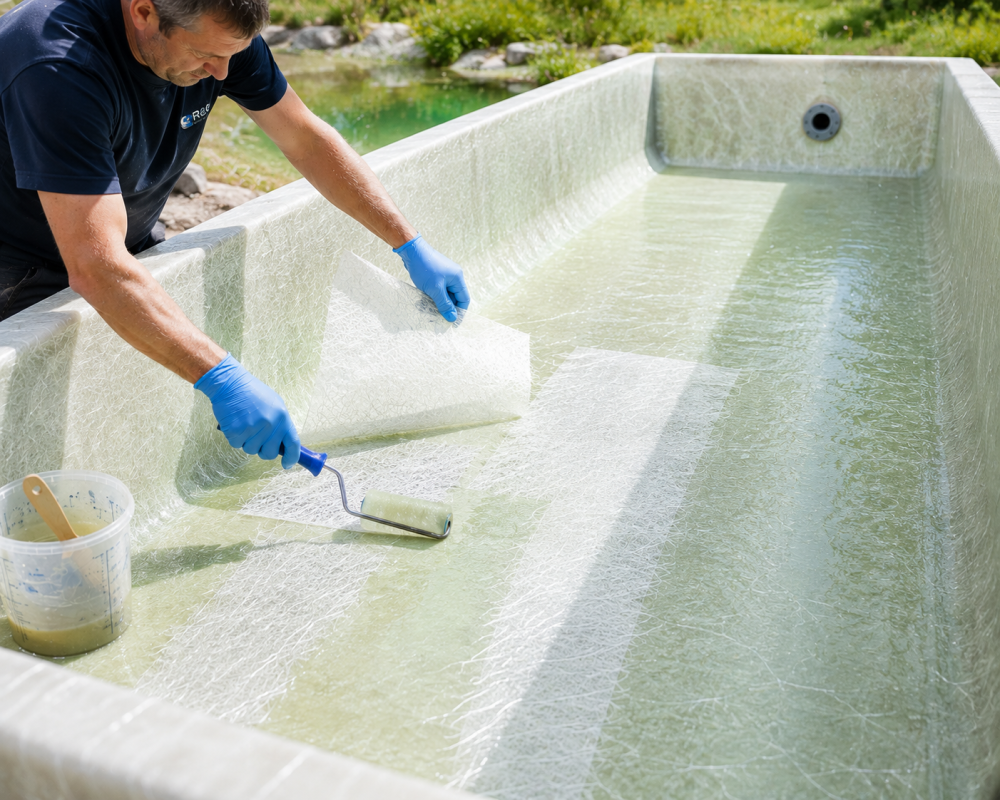
First apply the resin evenly to the substrate, position the pre-cut mat and then wet it out completely with resin. As the mat becomes saturated, it softens and conforms well to the component contour.
Carefully remove trapped air using a brush or laminating roller. Several layers can be applied wet-on-wet. For thicker laminates, ensure complete wet-out and avoid unnecessary excess resin.
Tip: Due to their comparatively low fibre volume content, glass fibre mats require considerably more resin than glass fabrics. For larger areas, it is therefore better to mix several smaller resin batches one after another.
Suitable resin systems
Suitable for polyester and vinyl ester resins as well as suitable epoxy resin systems. With epoxy resins, the mat binder may behave differently than with polyester resins, which can reduce drapability.
Artistic applications
Glass fibre mats are also very suitable for artistic and decorative projects, for example when the characteristic fibre structure is intended to remain visible. For such applications, we recommend the highly transparent Epoxy Resin HT 2 + Hardener HT 2 (Item No. 105100). It is particularly suitable for applications where a clear and highly transparent resin matrix is required.
Technical data
- Area weight: 300 g/m²
- Width: 127 cm
- Fibre length: 50 mm
- Yarn fineness: 30 tex, split strand
- Binder: powder-bound
Calculated laminate data
At 15 vol.% fibre content:
Laminate thickness per layer: approx. 0.77 mm
Resin consumption: approx. 751 g/m²
Laminate weight: approx. 1,051 g/m²












 MSDS Glass fabric, tapes, braided sleeves, rovings, yarns, chopped strands (PDF)