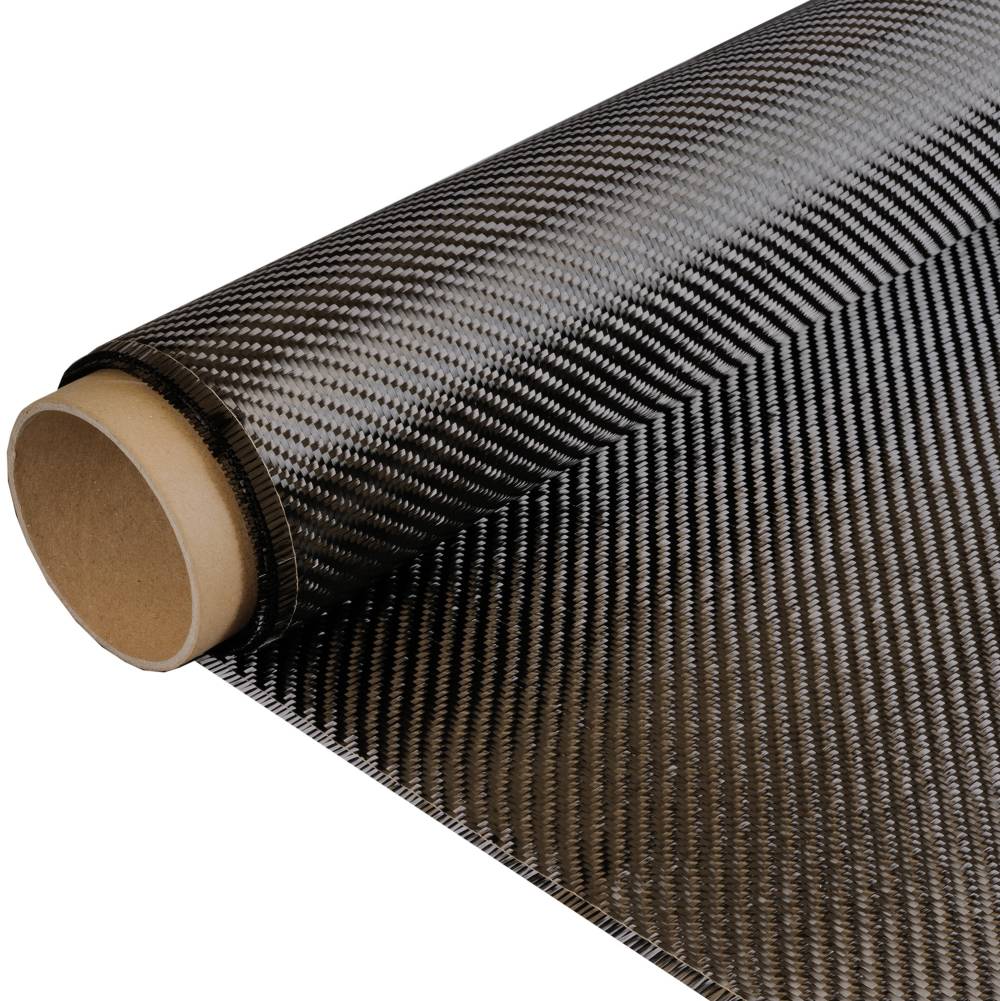
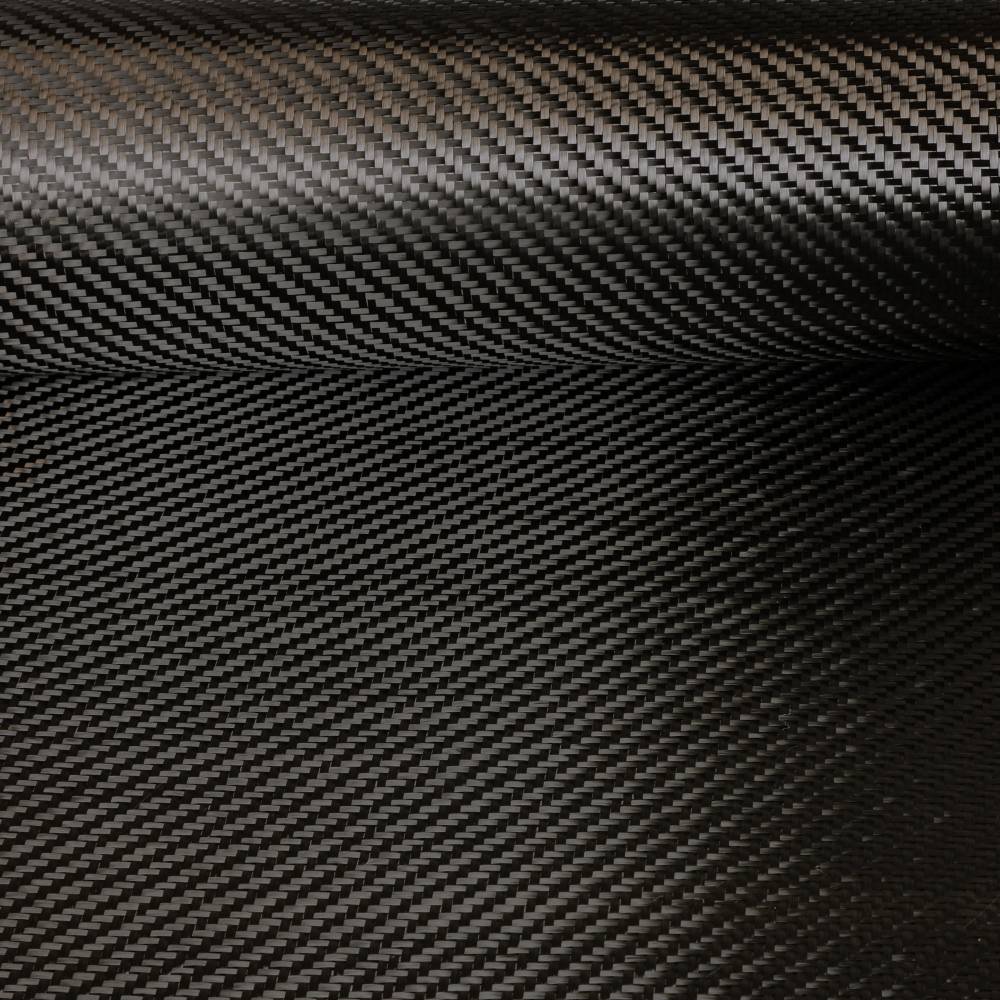
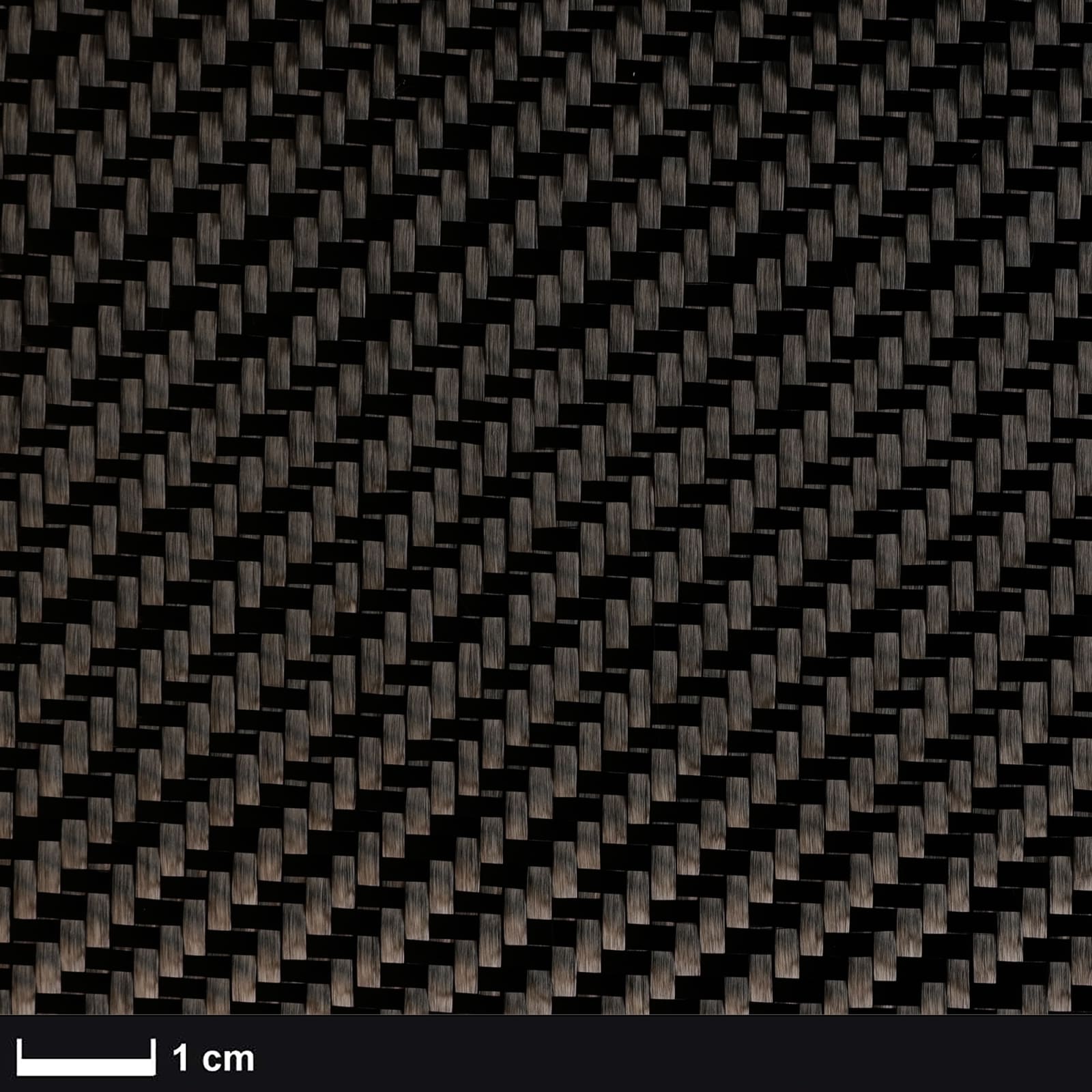
200 g/m² carbon fabric (Style 452-5 Aero) made from high-strength 3k carbon fibres in a 2/2 twill weave.
Drapable reinforcement fabric for demanding CFRP components with curved contours and high-quality visible carbon surfaces.
MATERIAL TO AEROSPACE SPECIFICATION
Style 452-5 Aero is manufactured from high-strength carbon fibres to specification WL 8.3611 and complies with aerospace fabric specification DIN 65147 / WL 8.3520.80. The 2/2 twill weave with 5 ends/cm in both warp and weft allows the fabric to conform well to radii and three-dimensional component contours. It is suitable for structural CFRP laminates and visible carbon components with a uniform twill pattern.
Technical data
| Fabric style |
Style 452-5 Aero |
| Fibre type |
Tenax® HTA 40, Torayca® T300 or Pyrofil™ TR30S (HT, 3k) |
| Yarn linear density |
200 ± 4 tex |
| Areal weight |
200 g/m² (R&G nominal value); 204 ± 8 g/m² (ECC specification) |
| Weave |
2/2 twill |
| Warp / weft count |
5.0 ± 0.2 / 5.0 ± 0.2 ends/cm |
| Dry fabric thickness |
approx. 0.38 mm (guideline value) |
| Fabric width |
100 cm (± 1 cm) |
| Fibre density |
1.80 ± 0.05 g/cm³ |
| Fibre tensile strength |
min. 3,750 MPa (WLB specification) |
| Fibre tensile modulus |
238 ± 4 GPa (WLB specification) |
| Fibre specification |
WL 8.3611 |
| Aerospace specification |
DIN 65147 / WL 8.3520.80 |
Typical applications
- Structural and fairing components for aircraft, subject to component-specific approval
- CFRP fuselage shells, wing components and fairings for model aircraft and UAVs
- Motorsport and automotive components, including body panels and air ducts
- Boatbuilding, marine applications and lightweight sports equipment
- Sandwich skins and CFRP shells with curved contours
- Technical housings and visible carbon components with a twill pattern
Properties and processing
The 2/2 twill weave has fewer yarn interlacings than a plain weave, allowing the fabric to conform more easily to curved mould surfaces, radii and complex component geometries. The balanced warp and weft counts provide reinforcement in both principal fibre directions.
Epoxy laminating resin systems with good fibre wet-out characteristics are suitable for high-quality CFRP laminates. Maintain accurate fibre alignment during cutting and lay-up, as the non-stabilised twill weave is prone to yarn displacement. Complete resin impregnation and careful air removal are particularly important in multi-ply laminates.
Aerospace applications additionally require compliance with the specified resin systems, manufacturing processes and component approvals. Conformity with the material specification does not itself constitute approval of the finished component.
Material selection
For dimensionally stable cut pieces or heat-assisted preforming, the binder-stabilised Style 452-5 Aero carbon fabric is available. Its one-sided epoxy binder stabilises the yarns during handling. The version offered here, without an additional stabilising binder, is suitable for conventional wet lay-up and retains the natural drapability of the twill weave.
Calculated laminate data for hand lay-ups with 35% fibre volume fraction
| Calculated resin requirement |
approx. 241 g/m² |
| Calculated laminate thickness |
approx. 0.32 mm |
| Calculated laminate areal weight |
approx. 441 g/m² |











 MSDS Carbon fibre (PDF)