Divinycell® H80 PVC rigid foam sheet, grid-scored & grooved
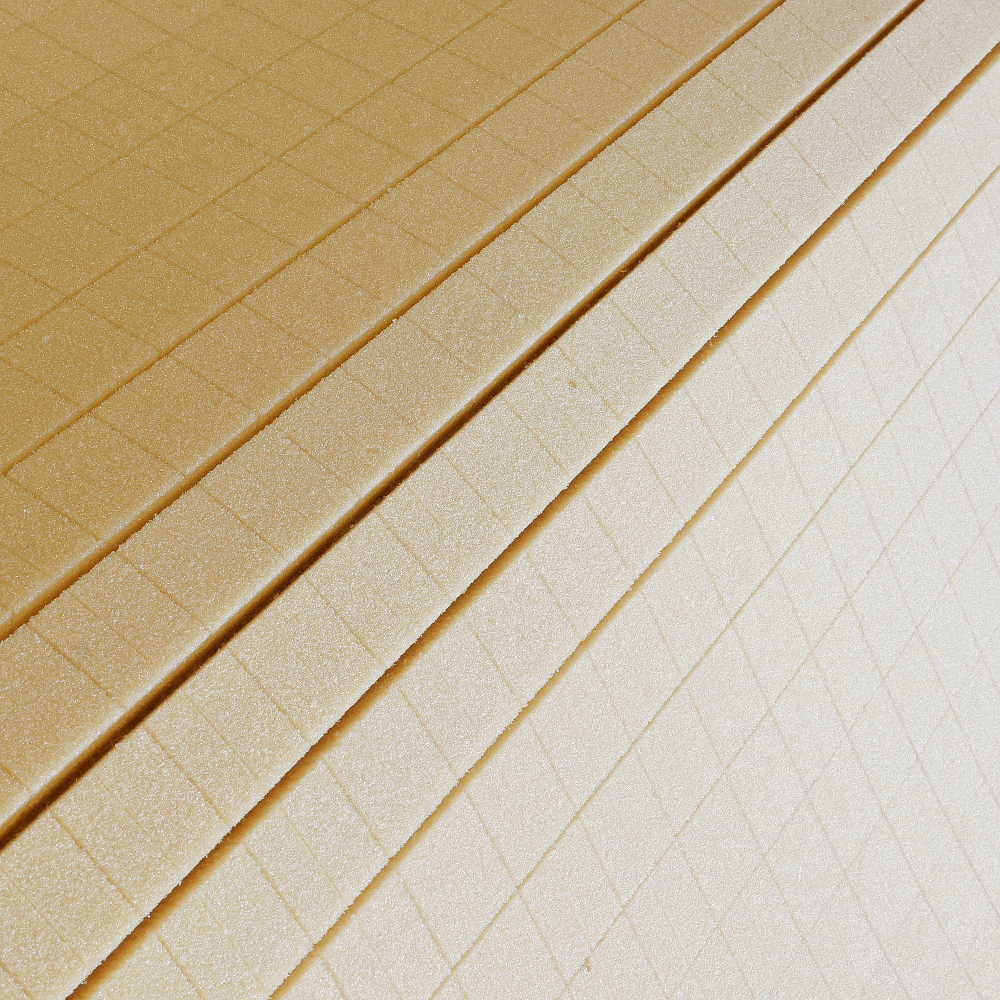
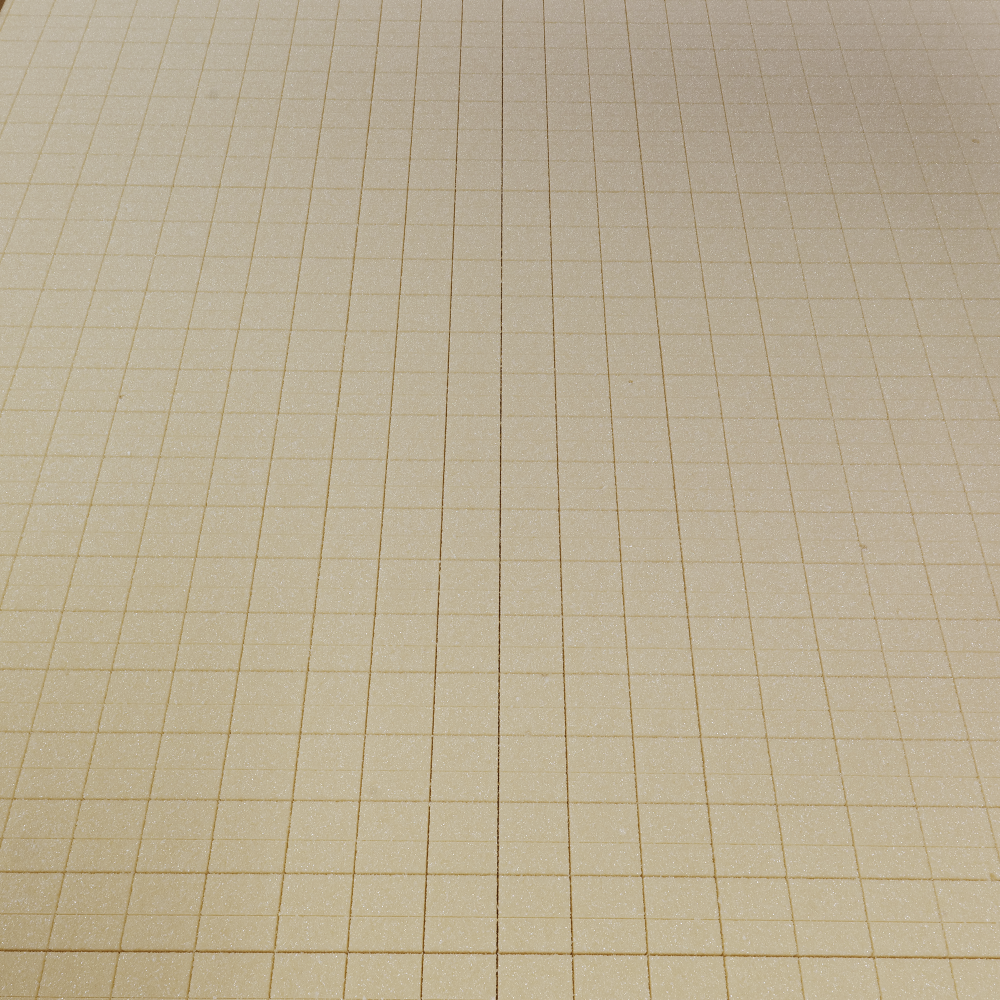
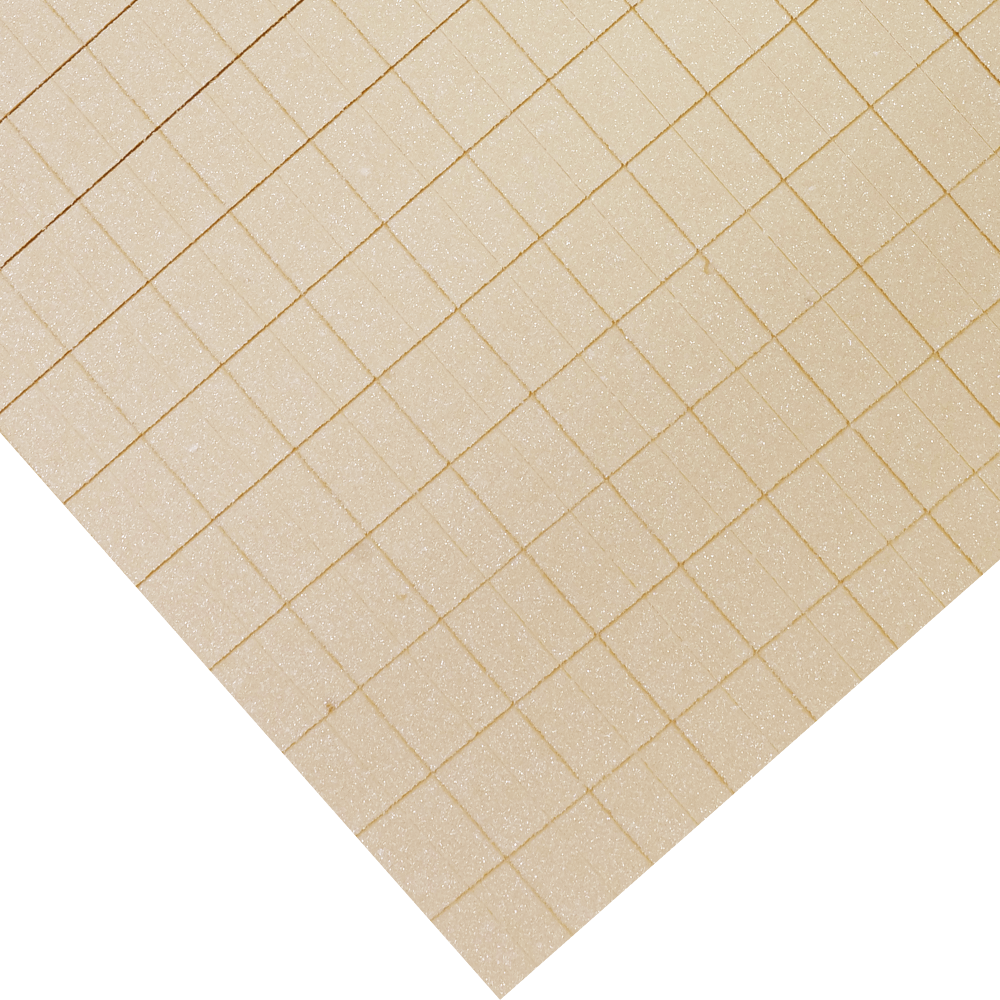
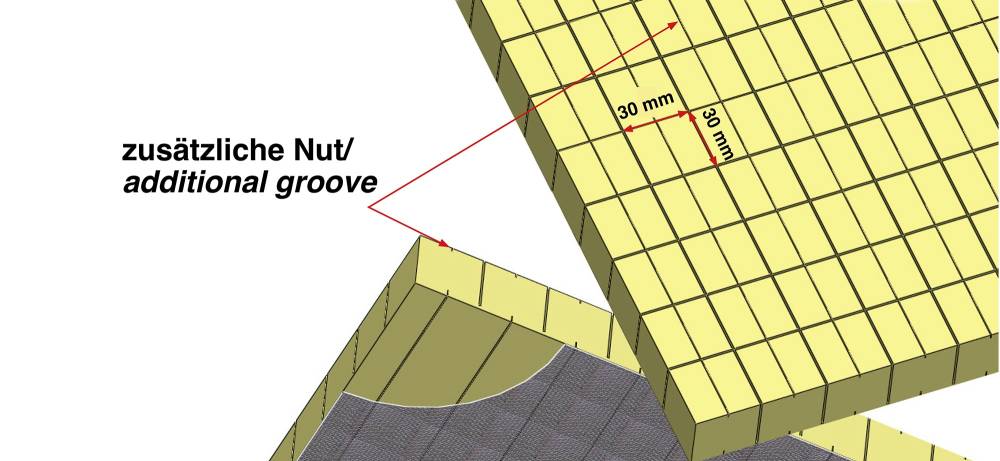
Divinycell® H80 Grid Scored + Grooved (Q200) is a high-quality PVC rigid foam core for use as a sandwich core in fibre-reinforced composite structures. The material combines a flexible flexible grid scoring (GS30) with additional grooves on both sides, which serve as an integrated flow aid for vacuum infusion processes.
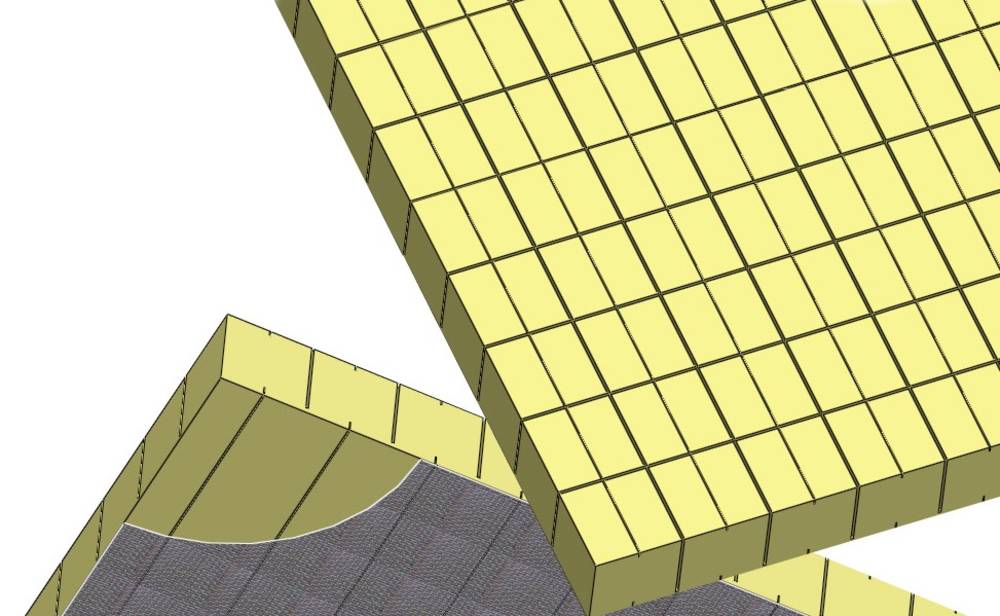
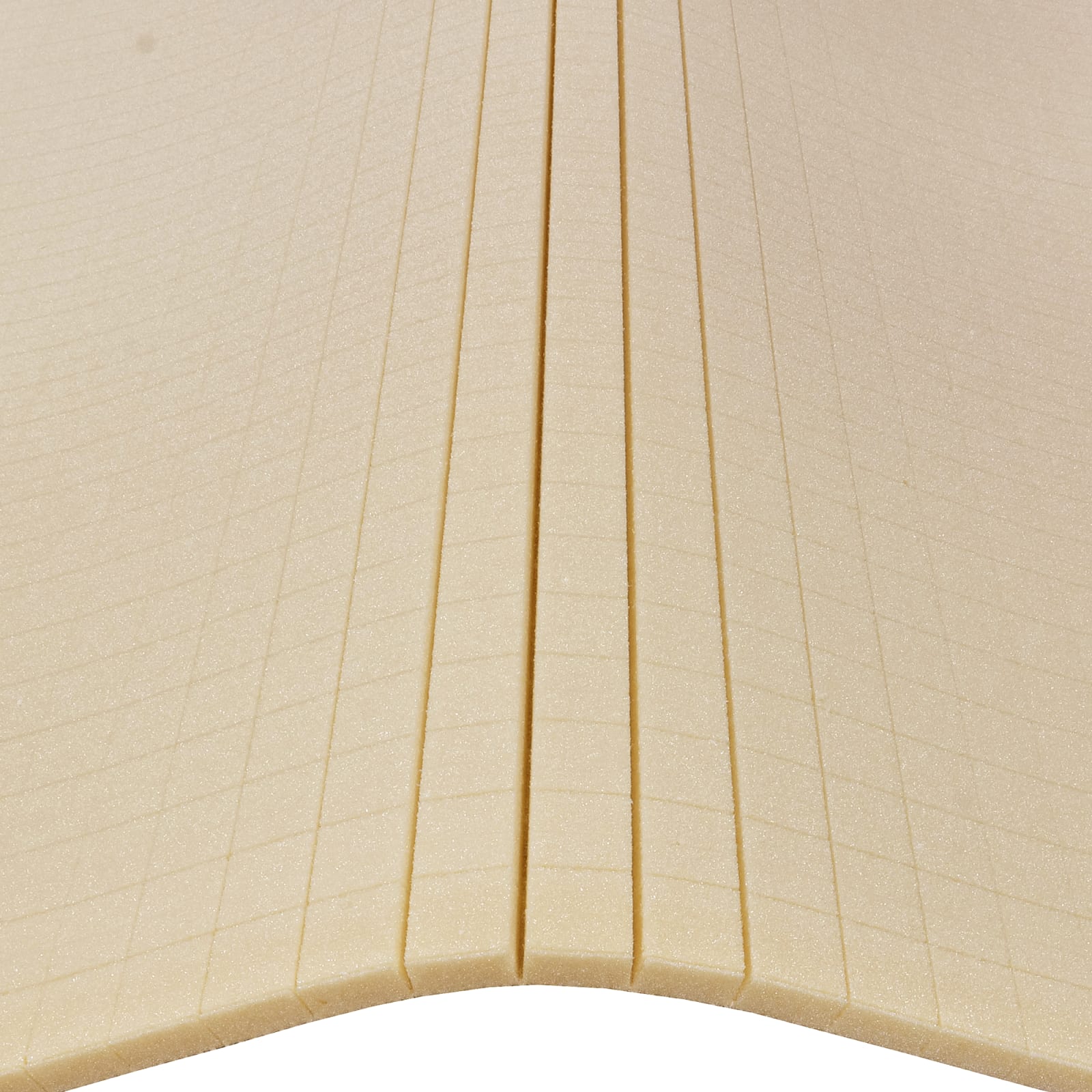
The grid scoring pattern in both longitudinal and transverse directions allows the core to conform easily to curved and complex geometries. The additional linear grooves significantly improve resin distribution during infusion. At the groove intersections, perforation points are created, enabling reliable resin transfer to both sides of the core.
This makes Divinycell® H80 Grid Scored + Grooved (Q200) especially suitable for vacuum-assisted resin infusion processes used in large-scale or highly contoured composite components. The laminated glass fibre scrim on the reverse side stabilises the individual segments and ensures easy, robust handling during processing.
Benefits
- Optimised for vacuum infusion processing
- Excellent resin distribution through integrated flow channels
- High flexibility for curved and complex geometries
- Reduces labour effort and process costs
- Wide processing window for different infusion techniques
- Fast and easy handling during lay-up
- Low weight combined with high sandwich stiffness
Typical Applications
Divinycell® H80 Grid Scored + Grooved (Q200) is used wherever lightweight yet stiff sandwich structures with optimised resin infusion are required.
- Deck surfaces and surface structures
- Boat hulls and marine superstructures
- Outer shells of rotor blades
- Large-area sandwich panels
- Vehicle and industrial cladding
Technical Data
Grid scoring(GS30):
- Grid spacing (centre-to-centre): 30 mm
- Score depth: sheet thickness minus approx. 2 mm
- Score width: approx. 0.9 mm
Linear grooves on both sides as an alternative to separate flow media:
- Grid spacing (centre-to-centre): 30 mm
- Groove depth: approx. 3.5 mm
- Groove width: approx. 0.9 mm
Processing
Divinycell® H80 Grid Scored + Grooved (Q200) has been specially developed for vacuum infusion processes. The integrated flow channels support uniform resin distribution and simplify the production of large or complex sandwich composite parts.
The combination of grid scoring, flow grooves and perforation enables reliable and reproducible infusion performance, even in demanding component geometries.
Typical Sandwich Structure
- Glass fibre or carbon laminate
- Divinycell® H80 Grid Scored + Grooved (Q200)
The result is a lightweight, stiff and durable sandwich structure with high flexural stiffness and optimised resin distribution throughout the infusion process.
Mechanical data of Divinycell® H80:
| Property |
Test method |
Unit |
|
Value |
| Compressive strength¹ |
ASTM D 1621 |
MPa |
Nominal |
1.4 |
| Minimum |
1.15 |
| Compressive modulus¹ |
ASTM D1621-B-73 |
MPa |
Nominal |
90 |
| Minimum |
80 |
| Tensile strength¹ |
ASTM D 1623 |
MPA |
Nominal |
2.5 |
| Minimum |
2.2 |
| Tensile modulus¹ |
ASTM D 1623 |
MPa |
Nominal |
95 |
| Minimum |
85 |
| Shear strength |
ASTM C 273 |
MPa |
Nominal |
1.15 |
| Minimum |
0.95 |
| Shear modulus |
ASTM C 273 |
MPa |
Nominal |
27 |
| Minimum |
23 |
| Shear strain |
ASTM C 273 |
% |
Nominal |
30 |
| Density |
ISO845 |
kg |
Nominal |
80 |
All values measured at +23 °C
¹ Properties measured perpendicular to the plane.
Nominal value is the average value of a mechanical property at a nominal density.
Minimum value is a minimum guaranteed mechanical property a material has independently of density.
Technical characteristics of Divinycell® H80:
| Characteristics¹ |
Unit |
Value |
| Density variation |
% |
+9/-16% |
| Thermal conductivity² |
W/(m-K) |
0.031 |
| Coeff, linear heat expansion |
x10-6/°C |
40 |
| Heat distortion temperature |
°C |
+125 |
| Continuous temp range |
°C |
-200/+70 |
| Max process temp |
°C |
+90 |
| Dissipation factor |
- |
0.0005 |
| Dielectric constant |
- |
1.09 |
| Poissons ratio³ |
- |
0.4 |
¹ Typical values
² Thermal conductivity at +20°C
³ Standard deviation is 0.045












 Technical Data Sheet Divinycell® H (PDF)